
How to Teach Procedures in the Classroom (The Right Way!)
Let’s be honest. The beginning of the school year is exciting, exhausting, and a little chaotic all at once. You have got a room full of fresh faces who do not yet know where to line up, how to turn in their work, or what a quiet signal even means. And that means it is time to do the thing that separates a smooth school year from a stressful one: teach your procedures. If you have ever wondered how to teach procedures in the classroom to make the rest of your year run smoothly, you are in the right place.
Why Teaching Classroom Procedures Is Non-Negotiable
Here is the truth that every experienced teacher knows: the time you invest in teaching classroom procedures in August pays you back every single day in October, January, and May.
When students know exactly what to do and when to do it, a few things happen:
- Transitions get faster
- You spend less time redirecting behavior
- Students feel more confident and independent
- You actually get to teach instead of manage
Skipping or rushing through procedures at the start of the year is one of the biggest reasons classrooms feel chaotic by week three.
The Most Important Thing Nobody Talks About
Before we get into the how, let’s talk about the thing that makes or breaks the whole process.
*You need to know exactly what you want your procedures to look like before you ever introduce them to students.*
Not a general idea. A crystal clear, step-by-step picture of what the procedure looks and sounds like when it is done correctly.
Ask yourself:
- What are students doing with their bodies?
- What does the noise level sound like?
- How long should this procedure take?
- What does it look like when it goes perfectly?
If you cannot answer those questions before you teach it, your students definitely will not be able to either. The clearer you are going in, the faster procedures stick. This is the foundation everything else is built on.
Using procedure teaching slides can ensure that you stay focused on your expectations.
How to Teach Procedures in the Classroom: Interactive Modeling
Once you know exactly what you want a procedure to look like, it is time to teach it. And the most effective way to do that with early elementary students is through interactive modeling.
Here is how it works, step by step:
Step 1: You model the procedure.
Walk through the procedure exactly the way you want students to do it. Be deliberate and precise. Show every single step.
Step 2: Ask students what they noticed.
After you model, turn it back to the class. Ask: “What did you see me do?” Let students name the specific steps and behaviors they observed. This builds understanding and keeps them actively engaged instead of just watching.
Step 3: Have a small group model it.
Invite a few students to try the procedure while the rest of the class watches. Give specific positive feedback as they go.
Step 4: Practice as a whole class.
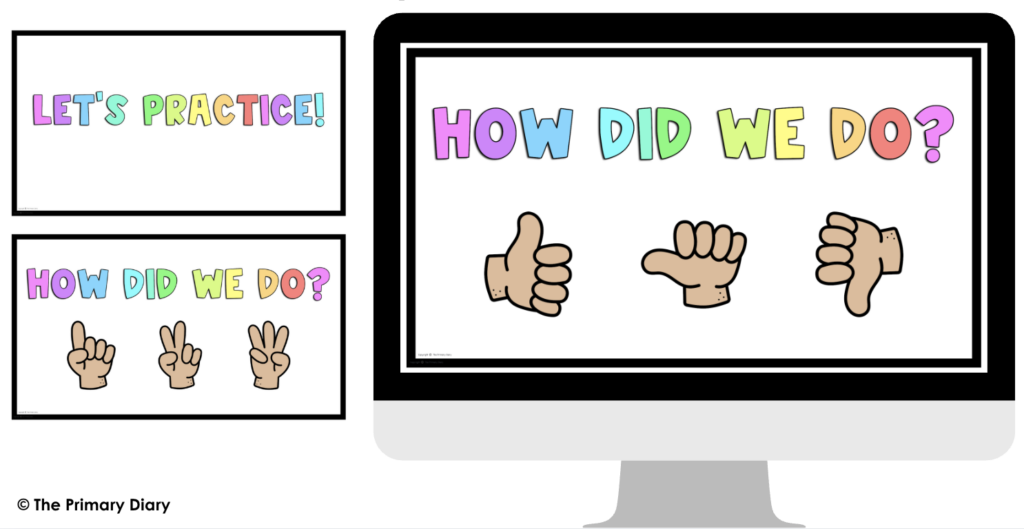
Now everyone tries it together. Watch closely, narrate what is going well. Then, have the class silently score themselves. By evaluating themselves, they are internalizing your expectations and are more likely to meet them in the future.
Step 5: Celebrate and reinforce.
When the class nails it, name it out loud. “That transition took 20 seconds and everyone was quiet. That is exactly what we practiced.” Positive reinforcement goes a long way.
And when things fall apart?
Go back to interactive modeling. Do not just remind students verbally. Walk through the whole process again. After a long weekend, a substitute day, or just a random rough Wednesday, a quick round of interactive modeling resets everything.
Which Classroom Procedures Should You Teach First?
Start with the procedures students will use every single day. These are the ones worth spending the most time on during the first two weeks.
Prioritize these first:
- Entering the Classroom
- Morning arrival routine
- Lining up and transitioning between spaces
- How to use classroom materials
- Bathroom and water procedures
- How to turn in assignments
- Noise level expectations
Once those are solid, layer in procedures that come up less frequently, like working in small groups, handling early finishers, or fire drill expectations.
I’m a firm believer in practicing the procedure when it comes up. For example, the first time students gather on the rug should also be the first time you go over the transitioning to the rug procedure.
Teaching Classroom Procedures: Making Them Stick Long Term
Teaching a procedure once is just the introduction. Here are a few strategies for how to teach procedures in the classroom that help them stick all school year:
Keep the language consistent. Use the same words every time. If you call it the quiet signal on Monday, call it the quiet signal on Friday too. Consistency speeds everything up.
Narrate the positive. When students do a procedure correctly, say so out loud and be specific. This reinforces the behavior far more effectively than reminders about what not to do.
Revisit after every break. Procedures fade. After holidays, long weekends, or even a substitute day, plan for a quick review. It is so much easier to reset early than to undo two weeks of drift.
Establishing Classroom Routines and Procedures Without Starting From Scratch
Here is the thing nobody tells you: writing out every single procedure from scratch takes a lot of time. And you are already setting up your classroom, attending back-to-school meetings, and trying to learn 25 new names.
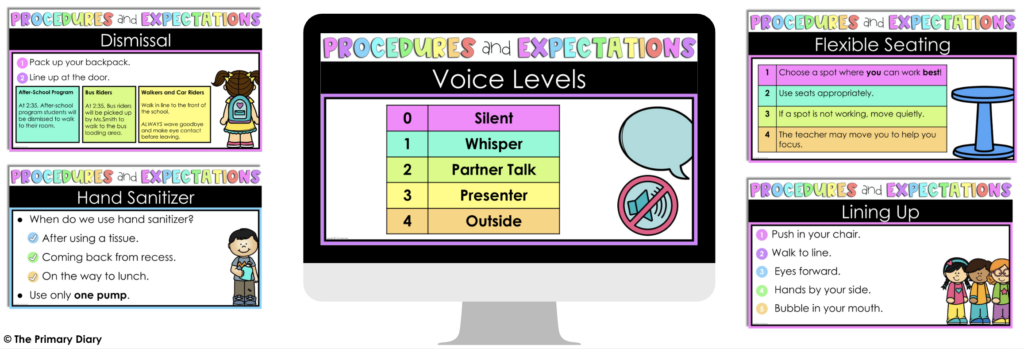
This is exactly where my Procedures and Expectations Slides come in.
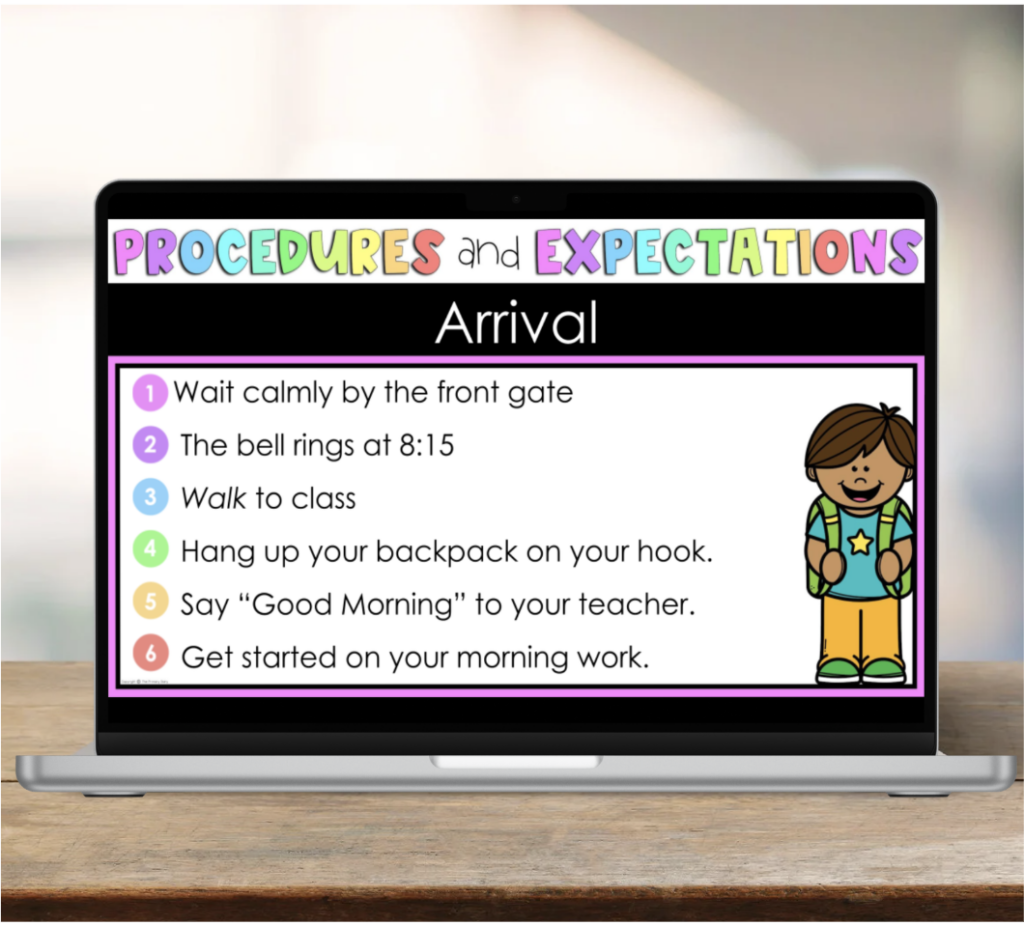
Remember how we talked about needing a crystal clear picture of what each procedure looks like before you teach it? These slides do that work for you. Each procedure is already written out in clear, simple, student-friendly language so you can walk in on day one knowing exactly what you want students to do.
Here is what you get:
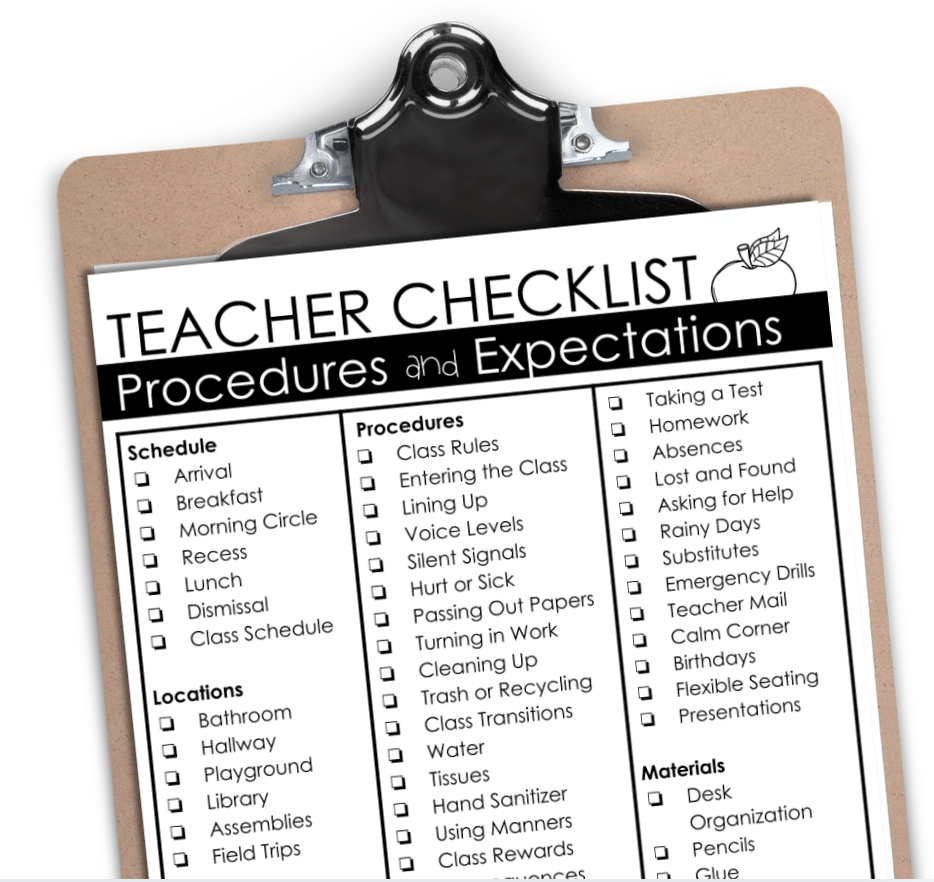
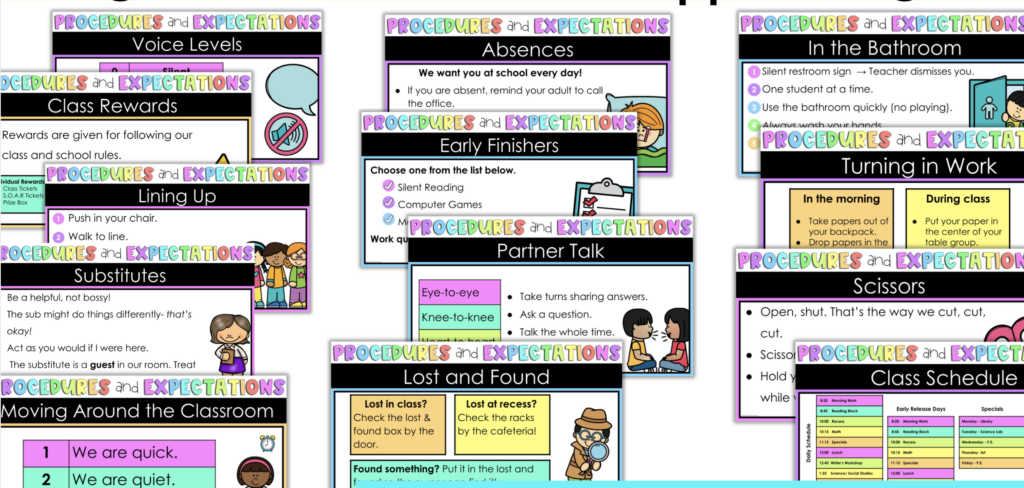
- Procedures already written out and ready to teach
- 70 + Fully editable Google Sldies so you can customize anything to fit your classroom
- Printable Procedures Checklist
- Covers the key procedures students need from day one
- Saves you serious time during one of the busiest weeks of the year
Establishing classroom routines and procedures does not have to feel overwhelming. With a clear plan and the right tools, you can walk into the first week of school feeling genuinely prepared.
A Few Final Tips Before You Head Back to School
- Plan to spend the first two weeks heavily focused on procedures. It is not lost time. It is an investment that pays off all year.
- Know what you want before you teach it. Clarity on your end creates clarity for your students.
- Be patient. Learning procedures takes time and repetition for everyone, including you.
- Make it fun where you can. Celebrate when the class nails a transition. Joy goes a long way in August.
- When procedures fall apart, go back to interactive modeling. Every time.
Your students are so lucky to have a teacher who cares enough to set them up for success from day one.
Don’t miss these
– Easy First Week Activities you need try!!
– 5 Tips for Procedures that stick
One Comment