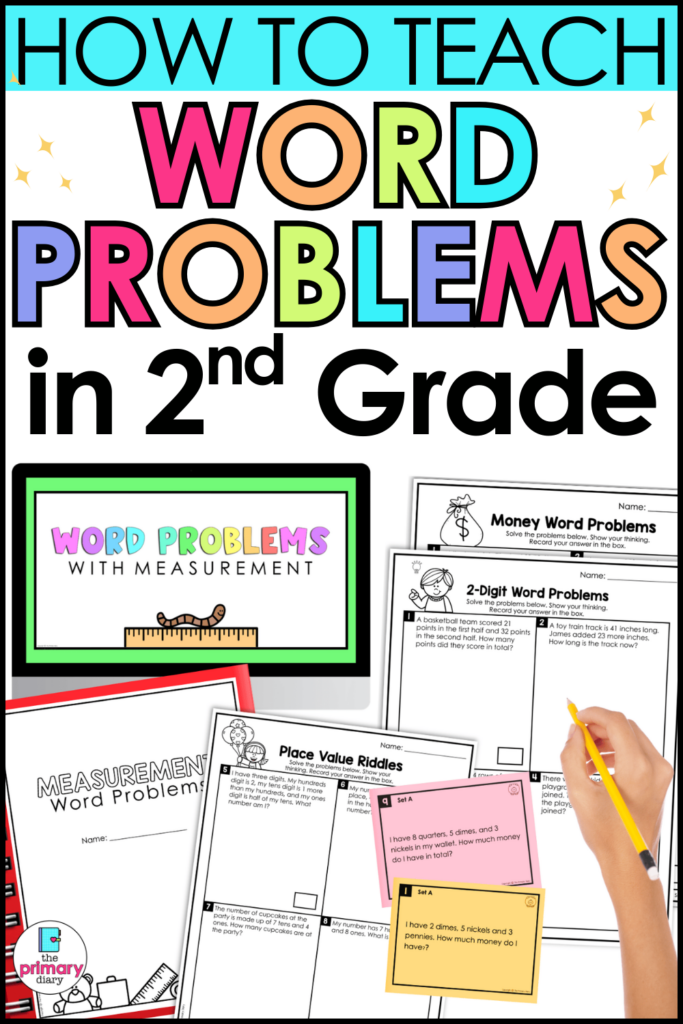
How to Teach Word Problems 2nd Grade (Without The Overwhelm)
How to Teach Word Problems 2nd Grade
Teaching word problems in 2nd grade can feel like a completely different subject from teaching computation. Your students can add. They can subtract. They can even regroup. But the second you wrap those skills inside a paragraph with names and actions and extra information?
Everything falls apart.
So if you’ve been wondering how to teach word problems 2nd grade in a way that actually builds confidence instead of panic, you’re in the right place.
Let’s talk about what really works.
How to Teach Word Problems 2nd Grade
First, we need to acknowledge something important.
Students do not usually struggle with word problems because they “can’t do math.” They struggle because they do not yet understand the story structure of the problem.
That is why the best way to approach how to teach word problems 2nd grade is to separate the thinking from the numbers.
Start ridiculously small.
Yes, small.
Instead of jumping straight into:
47 + 36
or
325 − 148
Start with:
4 + 5
7 − 2
Why? Because when the numbers are simple, students can focus on the action.
They can ask:
- What happened first?
- What changed?
- What is the question actually asking?
Once they understand the structure of a join, separate, compare, or two-step problem, then you increase the numbers.
Next, layer in complexity slowly.
That progression matters more than most teachers realize.
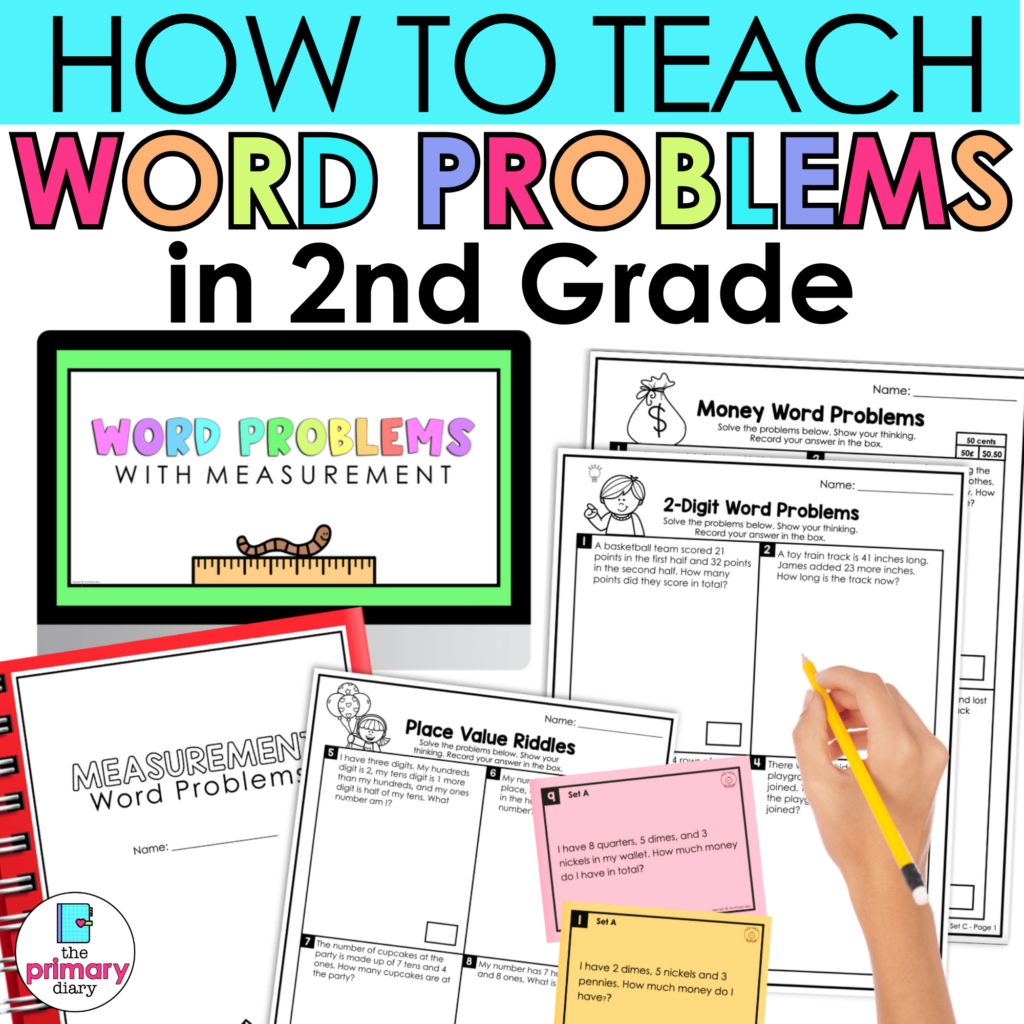
Tips for Teaching Word Problems That Actually Stick
If you want word problems to stop feeling chaotic, structure is everything.
Here are some practical tips for teaching word problems that I use every year:
1. Teach the Problem Types Explicitly
Second grade word problems are not random. They fall into categories.
Join problems.
Separate problems.
Comparison problems.
Two-step problems.
Unknowns in different positions.
When students recognize the structure, they stop guessing.
Instead of asking, “Is this addition or subtraction?” they start asking, “What happened in the story?”
That shift is powerful.
2. Increase Numbers Gradually
Curriculum often jumps from simple word problems straight into multi-digit, regrouping-heavy problems.
That is a recipe for frustration.
Instead, increase numbers gradually.
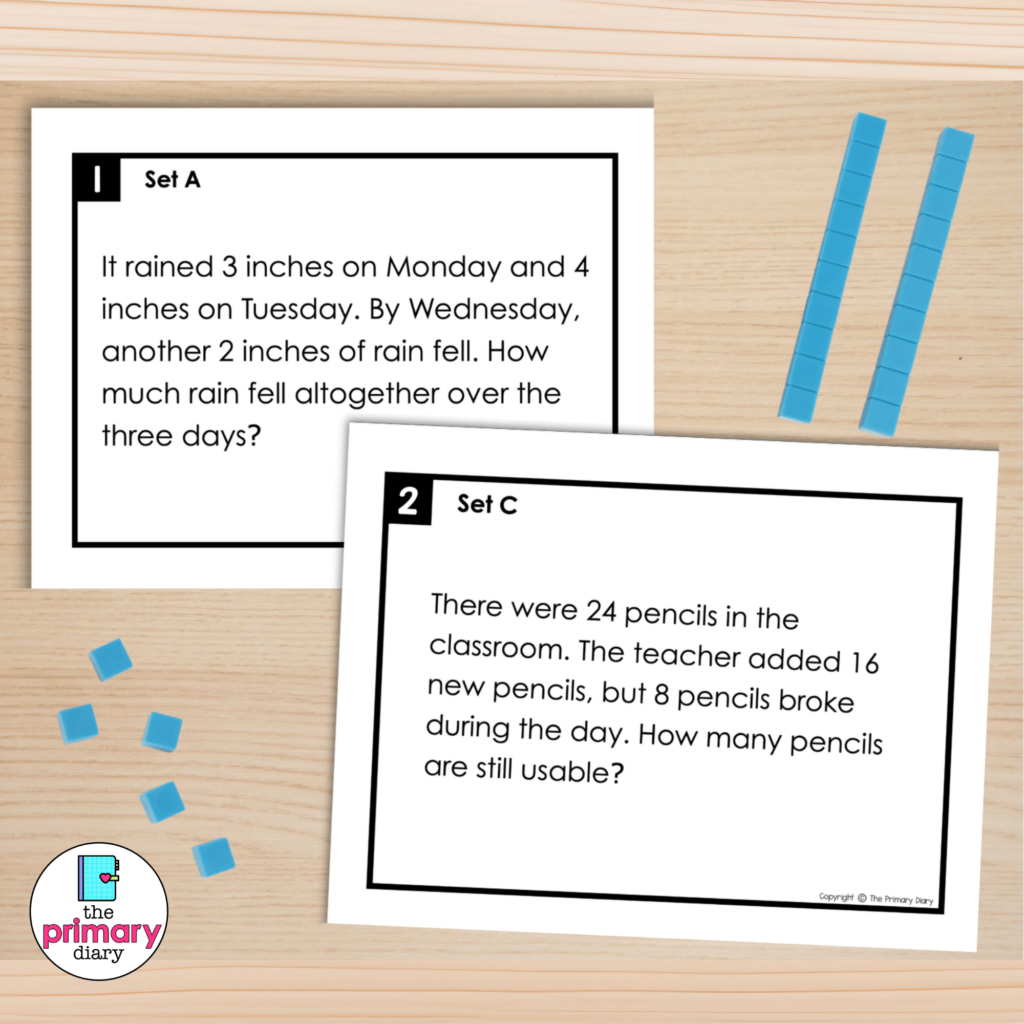
Start within 20.
Then move to 2-digit without regrouping.
Then introduce regrouping.
Then layer in 3-digit problems.
When students feel successful early, they are far more willing to attempt harder problems later.
3. Use Multiple Formats
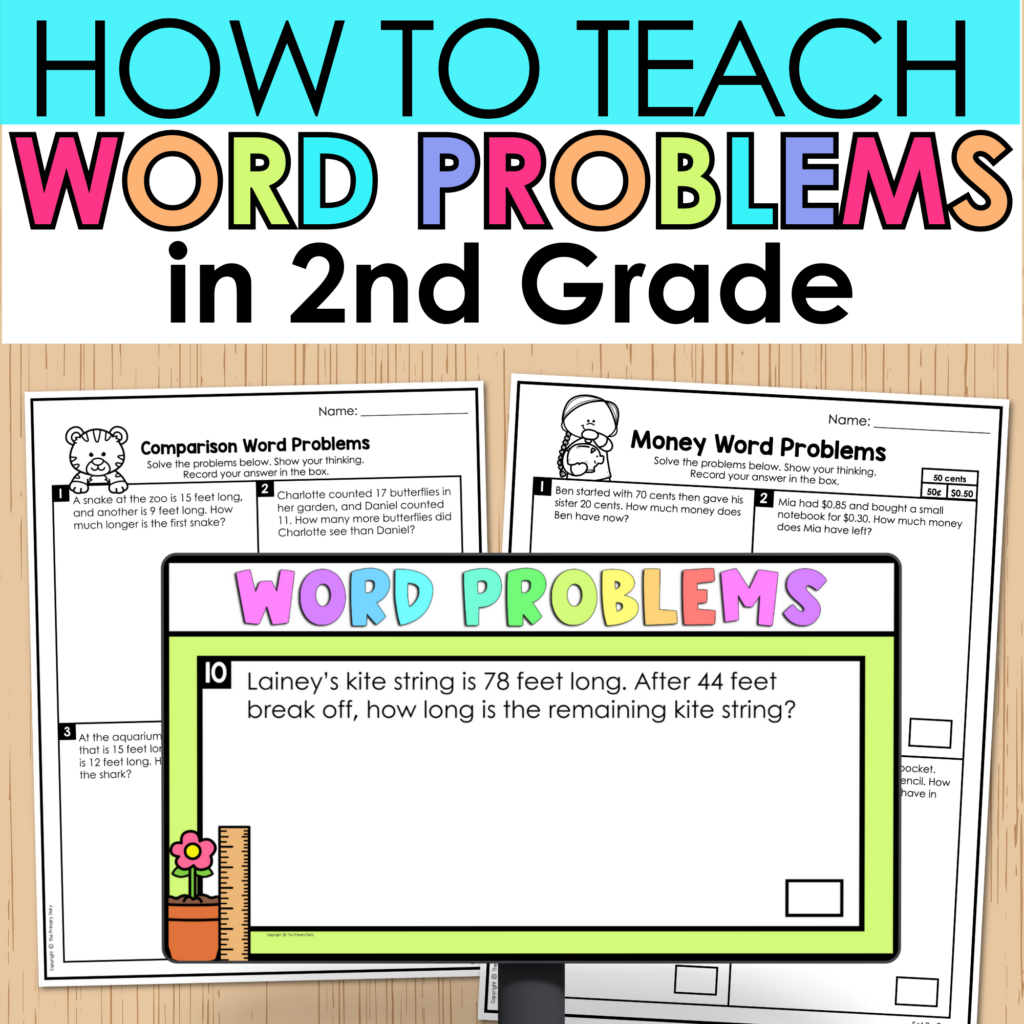
Some students think better when they write. Others prefer task cards. Others need a full-page journal format to show their thinking.
The more formats you offer, the more confident your students become.
This is especially helpful for two-step problems. Students need space to organize their thinking without feeling cramped.
4. Make Repetition Intentional
One lesson on comparison problems will not make students masters of comparison problems.
Confidence comes from repetition and exposure.
The key is structured repetition. Each new set should feel slightly more challenging, not overwhelming.
What Makes Word Problems So Tricky in 2nd Grade?
This is the time of year when standards get heavier. Expectations increase. Students are expected to apply math, explain reasoning, and solve multi-step situations.
However, most curricula introduce word problems without providing enough consistent practice.
And that is where things start to feel stressful.
Students need more than exposure. They need progression.
They need to see:
- Small numbers first
- Clear problem types
- Gradual increase in complexity
- Repeated practice across formats
When you teach word problems that way, students build confidence step-by-step instead of shutting down.
Final Thoughts on How to Teach Word Problems 2nd Grade
If word problems feel overwhelming right now, take a breath.
Start small.
Teach the structure.
Increase complexity gradually.
Repeat intentionally.
When students understand the thinking behind word problems, the numbers stop feeling scary.
And honestly, that is when math becomes empowering instead of intimidating.
If you want a ready-to-use system that covers every major 2nd grade word problem type with built-in progression, you can check out my Compelete 2nd Grade Word Problem Resource. It was designed specifically for teachers who need more structured practice without more prep work.
Because teaching word problems should feel organized. Not exhausting.
Are your 2nd Graders struggling to add & subtract? Check out these posts:
The Best 2-Digit Subtraction Strategies
3 Adding Strategies Every 2nd Grade Teacher Should Teach