The BEST 2 Digit Subtraction Strategies to Teach
Teaching subtraction can be surprisingly challenging, especially once regrouping enters the picture. Here’s the truth: 2 digit subtraction strategies can feel deceptively tricky. Students can breeze through the simple problems and feel confident, but the second you introduce regrouping, everything changes. Suddenly place value disappears, subtraction feels confusing, and some kids start treating the worksheet like a game of “cross out whatever number looks right.”
That is why I’m a huge believer in teaching subtraction through place value, not the standard algorithm right away. When students understand tens and ones, subtraction becomes logical instead of stressful. And honestly, that is the goal.
So let’s talk about what actually works in a 2nd grade classroom and how to teach subtraction in a way that sticks.
2 Digit Subtraction Strategies
The best 2 digit subtraction strategies help students SEE the numbers.
That means students need strategies that:
- show tens and ones clearly
- explain regrouping in a way that makes sense
- build confidence step-by-step
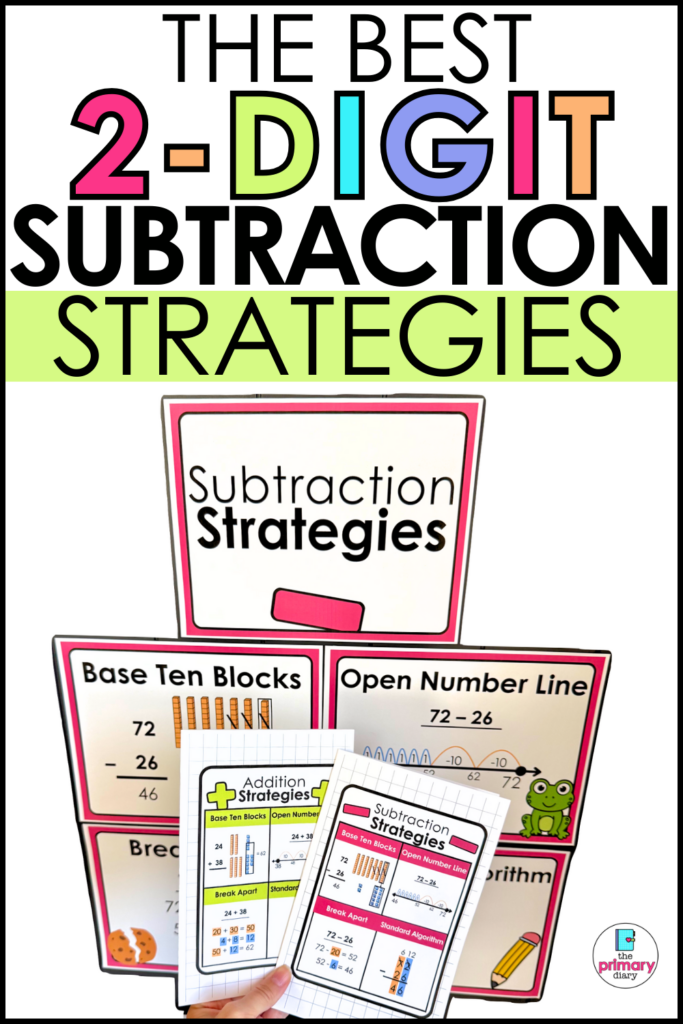
In my classroom, I rotate between three core strategies because different students “click” with different visuals:
- Break Apart (Expanded Form Subtraction)
- Base Ten Blocks
- Open Number Lines
Grab these FREE posters a the bottom of this page!
Next, let’s break down each one in a way you can actually teach tomorrow.
Teaching Subtraction Strategies
1. Break Apart Strategy (Expanded Form)
First, I teach subtraction using expanded form because it forces students to look at place value.
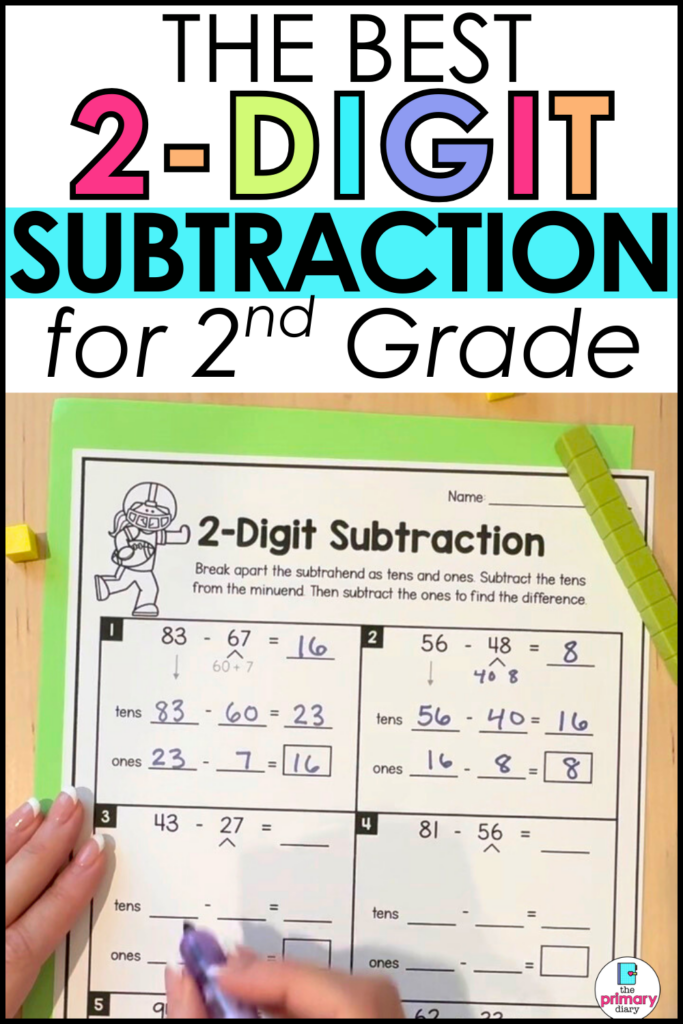
For example:
53 − 21
53 = 50 + 3
21 = 20 + 1
So students subtract tens and ones separately:
(50 − 20) + (3 − 1) = 30 + 2 = 32
This is clean, organized, and confidence-boosting.
Then, once students get comfortable, we introduce regrouping.
Example:
42 − 18
42 = 40 + 2
And this is where you slow down and model the thinking:
- “Do I have enough ones to take away 8?”
- “No, I only have 2 ones.”
- “So what can I do?”
Then you regroup in a way that makes sense:
42 becomes 30 + 12
Now students subtract:
(30 − 10) + (12 − 8) = 20 + 4 = 24
✨ Teacher tip: This is where students start to truly understand regrouping, not just “borrowing.”
2. Open Number Lines (Counting Back or Counting Up)
Next, teach subtraction on an open number line. This strategy works especially well for students who struggle to keep their steps organized.
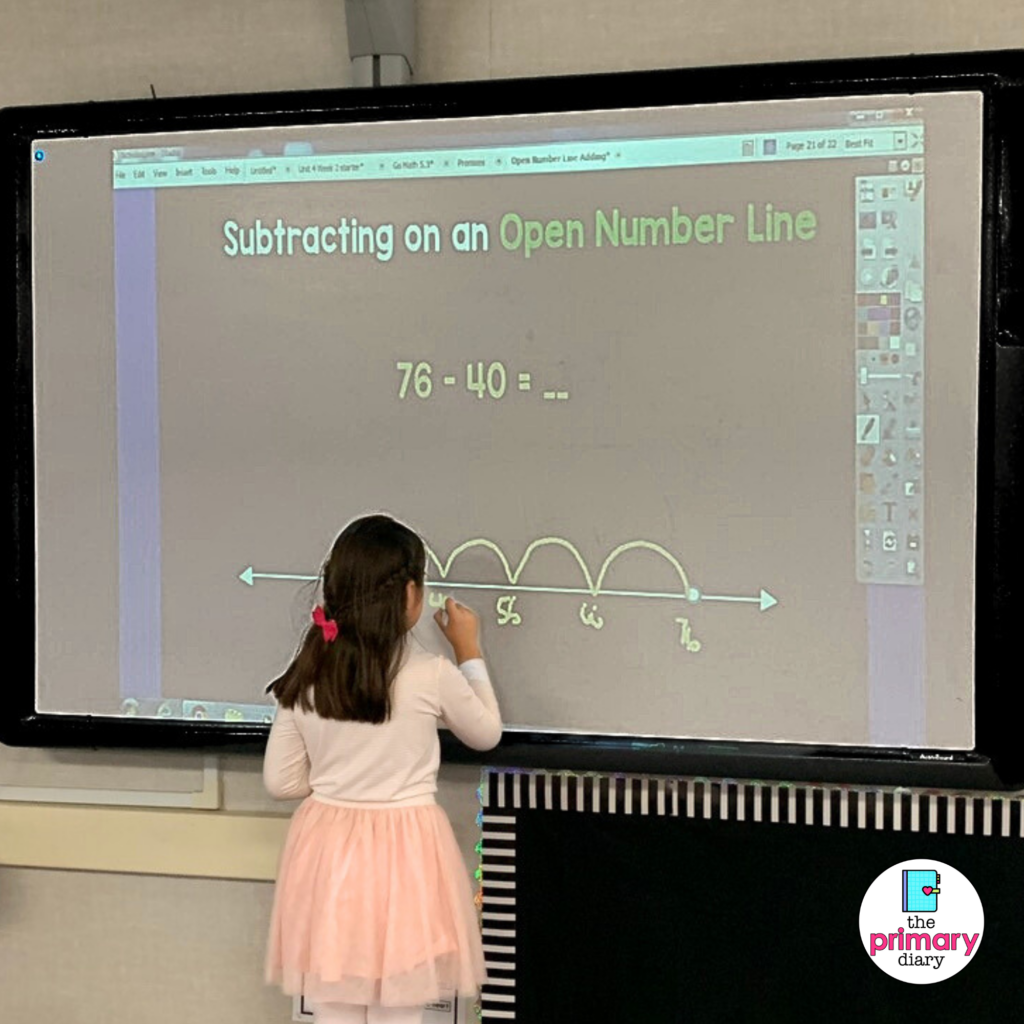
Example:
54 − 27
Start at 54
Jump back 20 → 34
Jump back 7 → 27
Answer: 27
Or (my personal favorite for some students), count UP to find the difference:
Start at 27
Jump +20 → 47
Jump +7 → 54
Total jumps = 27, so 54 − 27 = 27
The reason this works is simple: kids can see the distance between numbers.
3. Base Ten Blocks (the MVP strategy)
Finally, I bring in base ten blocks because nothing explains regrouping better than physically trading.
Which leads us perfectly into…
Subtraction With Regrouping Using Base Ten Blocks
When you teach subtraction with regrouping using base ten blocks, regrouping becomes a visual trade instead of a confusing rule.
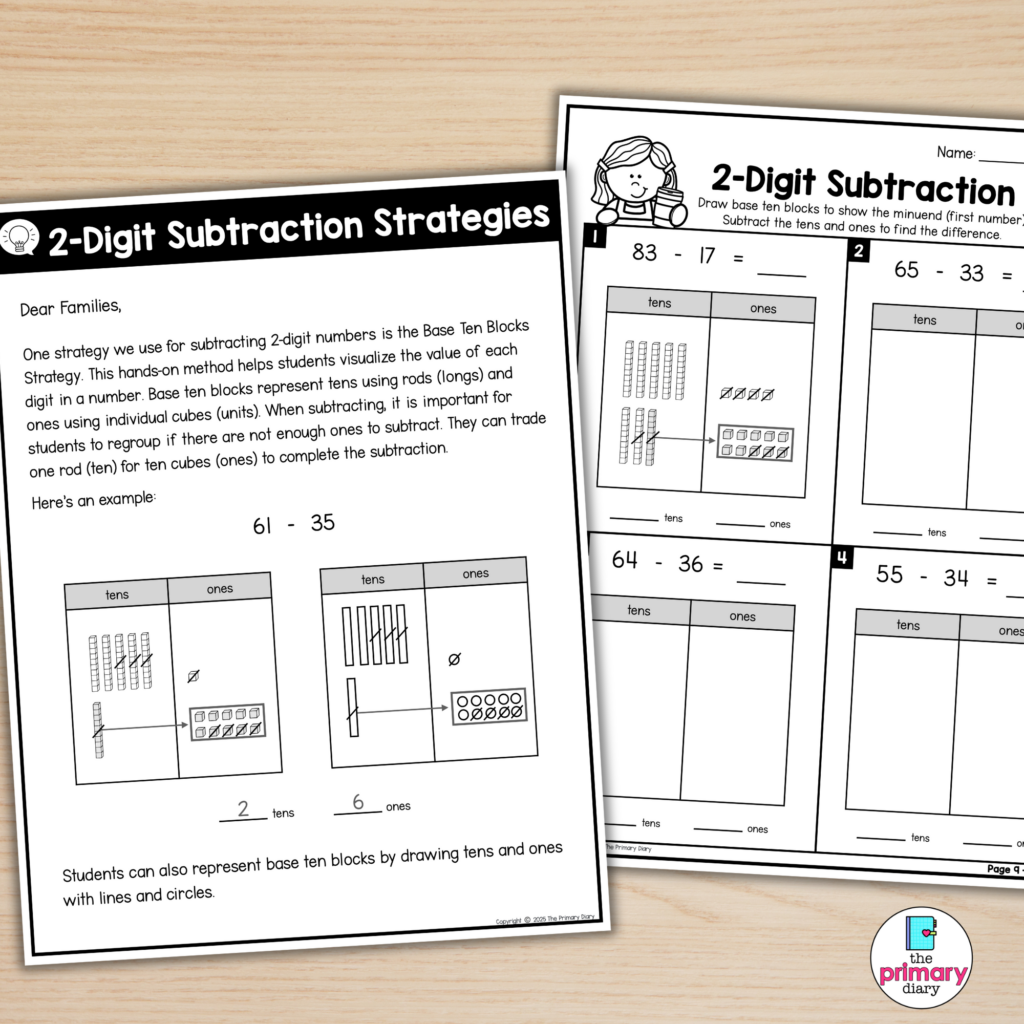
Let’s take this example:
41 − 17
Students build 41 using base ten blocks:
- 4 tens
- 1 one
Then subtract 17:
- 1 ten
- 7 ones
But they quickly hit the problem:
They only have 1 one. They need 7.
So now they trade:
- trade 1 ten for 10 ones
- now they have 3 tens and 11 ones
Now subtract:
11 ones − 7 ones = 4 ones
3 tens − 1 ten = 2 tens
Answer: 24
That’s regrouping.
Not “cross out the 4, make it a 3, then add 10 to the 1 because the teacher said so.”
The visual representation helps them to see what is actually happenning when we subtract.
✨ Teacher tip: After using blocks, have students draw quick base ten sketches. That helps them transition from concrete to visual without needing manipulatives forever.
The Best Way to Teach This Without Reinventing the Wheel
You can build all of this yourself. But you shouldn’t have to.
That’s why I created my 2–3 Digit Addition & Subtraction Strategy Pack. It supports subtraction instruction with:
- visual strategy posters
- parent letters for home support
- scaffolded worksheets with example problems
- a progression that builds from simple subtraction to regrouping
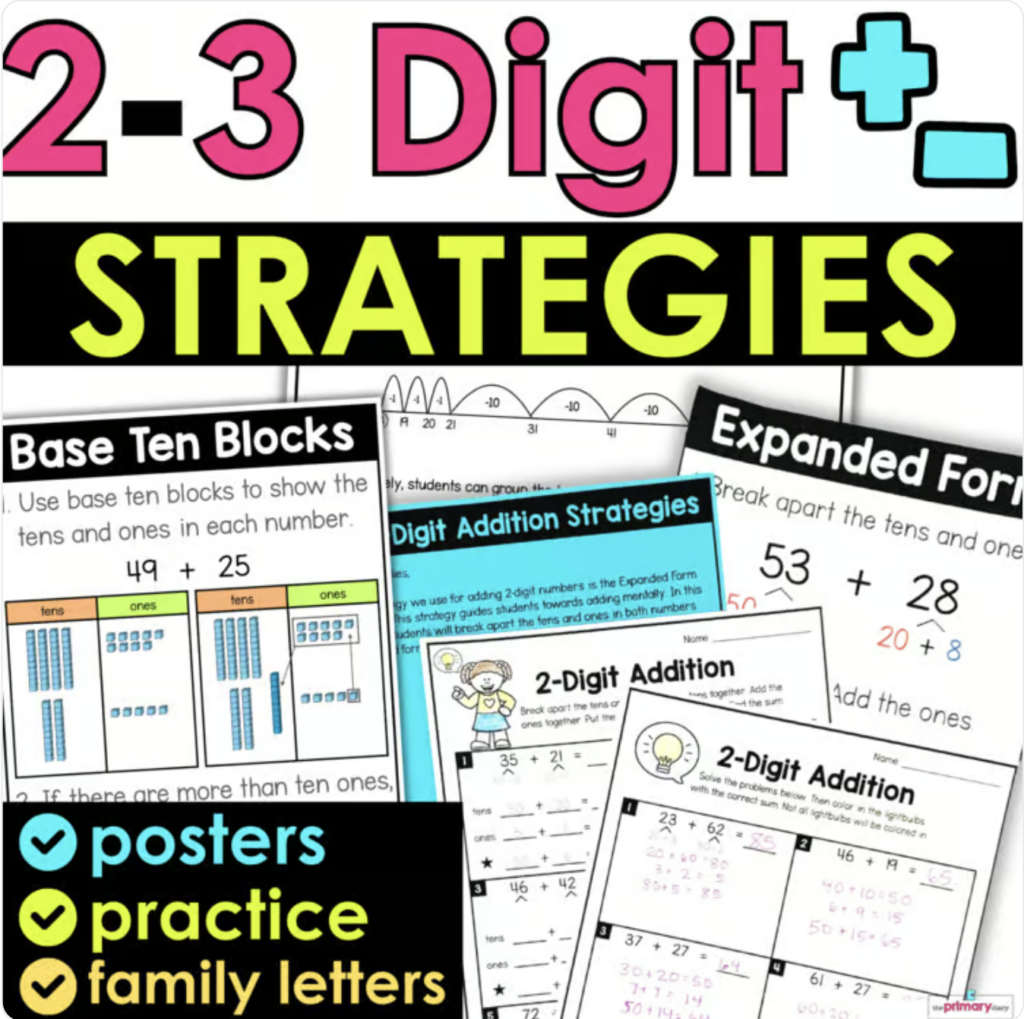
It’s everything you need to teach subtraction strategies clearly, confidently, and with place value at the center.
Final Thoughts
Teaching subtraction does not need to feel like chaos. With the right 2 digit subtraction strategies, your students can actually understand what regrouping means and feel confident solving problems independently.
Start with expanded form, reinforce with base ten blocks, and then build flexibility using open number lines.
And most importantly, remind yourself: if they forget it tomorrow, they did not fail. They just need more exposure. That is why we teach strategies, not tricks.
You’ll love these related posts!
How to Teach Jumping on a Number Line
Unlocking the Break Apart Strategy in Math
Place Value Strategy Addition: Teach Addition So It Actually Sticks