
Place Value Strategy Addition: Teach Addition So It Actually Sticks
If you have ever taught addition and thought, “They get it during the lesson… then forget it the second I stop holding their hand,” you are not alone. That is exactly why I swear by place value strategy addition instead of jumping straight into the standard algorithm.
Because when students actually understand how numbers work, they stop guessing. They stop relying on tricks. And they stop asking, “Do I carry the one?” like it is a magical ritual that makes math happen.
Instead, they start thinking.
In this post, I’m going to walk you through three classroom-tested addition strategies that build true number sense:
- Expanded form of addition (break apart strategy)
- Base ten blocks
- Open number lines
These strategies work beautifully for both 2-digit and 3-digit addition, and they help students build confidence as the numbers get bigger.
Why Place Value Strategy Addition Works (Especially in 2nd Grade)
First, let’s talk about the real problem.
Most students struggle with addition because they do not truly understand tens and ones yet. So when we rush into the algorithm, they memorize steps without understanding what any of it means.
Then, when the numbers change, they fall apart.
On the other hand, when you teach place value strategy addition, you give students tools that transfer. They can solve a variety of problems because they understand the structure of numbers.
Next, they start to approach addition like this:
- “I can break apart this number.”
- “I can add tens first.”
- “I know how to regroup because I understand why it happens.”
That is the goal.
Expanded Form of Addition (Break Apart Strategy)
If there is one strategy that gets the biggest “aha!” reaction from kids, it is the expanded form of addition.
This strategy teaches students to decompose numbers into tens and ones, add them separately, and then combine.
For example:
36 + 27
- 36 = 30 + 6
- 27 = 20 + 7
Then: - (30 + 20) + (6 + 7)
- 50 + 13 = 63
Here is why this is such a powerful strategy:
- It forces students to see tens and ones.
- It helps regrouping make sense instead of feeling random.
- It builds the foundation for mental math.
To teach it effectively, start with no-regrouping problems first. Then, once students feel confident, introduce regrouping slowly.
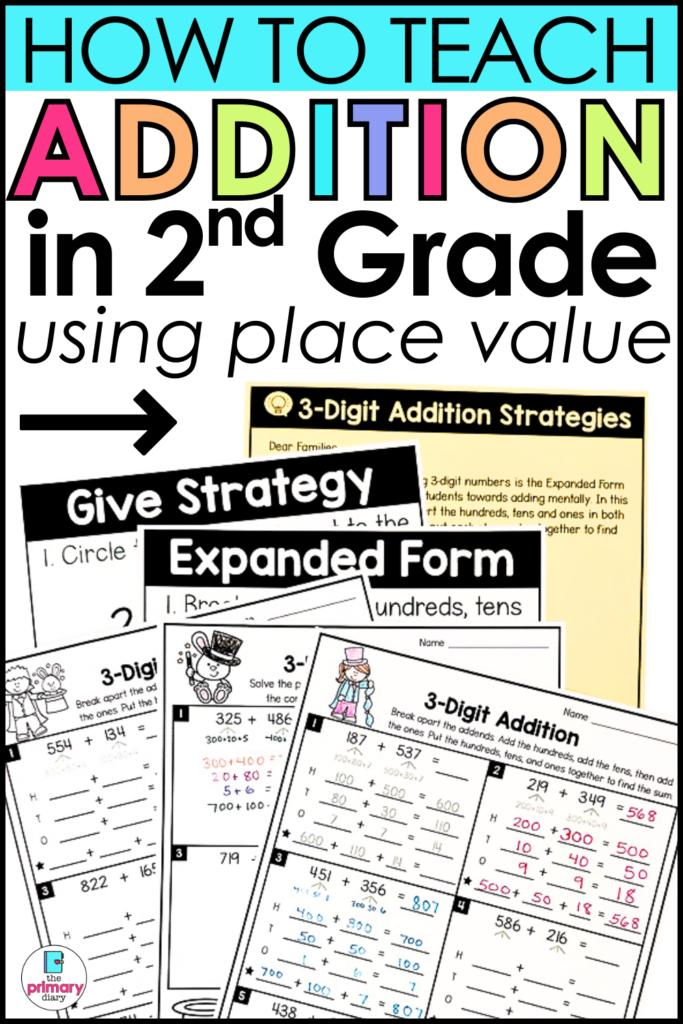
Most importantly, model your thinking out loud every time. Students need to hear the process, not just see the answer.
Base Ten Blocks (Concrete Before Abstract)
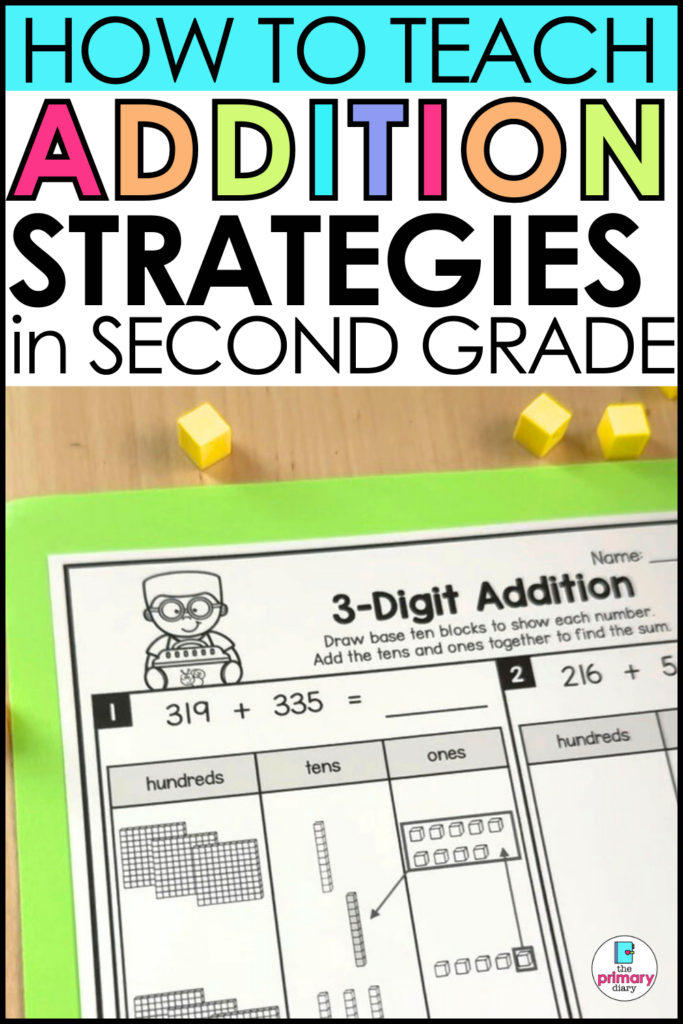
Next, bring in base ten blocks. This strategy is non-negotiable for many learners, especially when you introduce regrouping.
Base ten blocks allow students to physically build numbers, combine them, and then trade ones for tens.
For example:
48 + 15
- Build 48 (4 tens, 8 ones)
- Add 15 (1 ten, 5 ones)
Now you have: - 5 tens and 13 ones
Trade 10 ones for 1 ten: - 6 tens and 3 ones
Answer: 63
This method builds deep understanding because students can see exactly what regrouping means. Regrouping stops being a mysterious “carry” and becomes a logical trade.
After that, transition to drawing quick base ten sketches. That way, students can use the strategy even when the blocks are not in their hands.
Open Number Lines (Flexible + Powerful for 2-Digit and 3-Digit Addition)
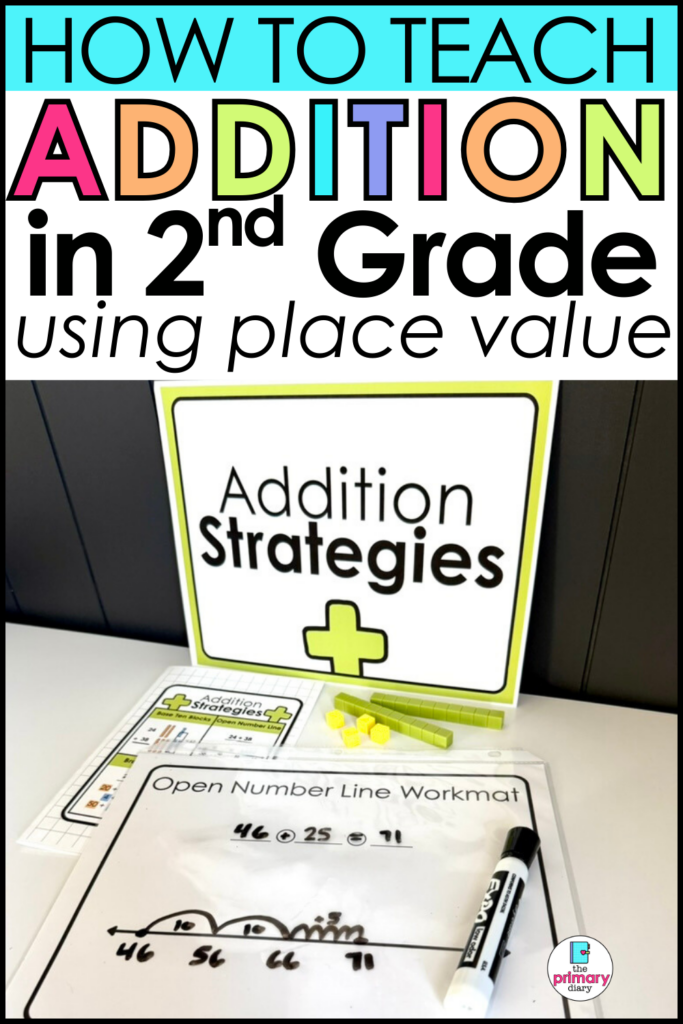
Then, once students feel comfortable with tens and ones, teach the open number line.
This is one of the best strategies for building flexible thinkers. It also makes adding larger numbers feel manageable.
For example:
56 + 28
Start at 56
Jump +20 → 76
Jump +8 → 84
At first, model jumps that match place value:
- tens first
- ones second
Later, allow flexibility. Some students love breaking the +8 into +4 and +4. Others like +10 then back 2. Both are valid, as long as their reasoning is solid.
That is the beauty of this strategy.
Even better, this number line thinking transfers smoothly into 3-digit addition.
For example:
236 + 42
Start at 236
Jump +40 → 276
Jump +2 → 278
Same strategy, bigger numbers, confident kids.
How to Teach These Place Value Strategies Easily
Let’s be real. Teaching strategies takes time. But prepping all the visuals, examples, and practice pages takes even more time.
That is why I created my 2–3 Digit Addition & Subtraction Strategy Pack.
Even though the resource includes subtraction too, it is perfect for teaching addition because it includes:
- visual strategy posters for student reference
- parent letters to support families at home (and keep everyone using consistent strategies)
- scaffolded worksheets that build in complexity step-by-step
- example problems that help students know exactly what to do
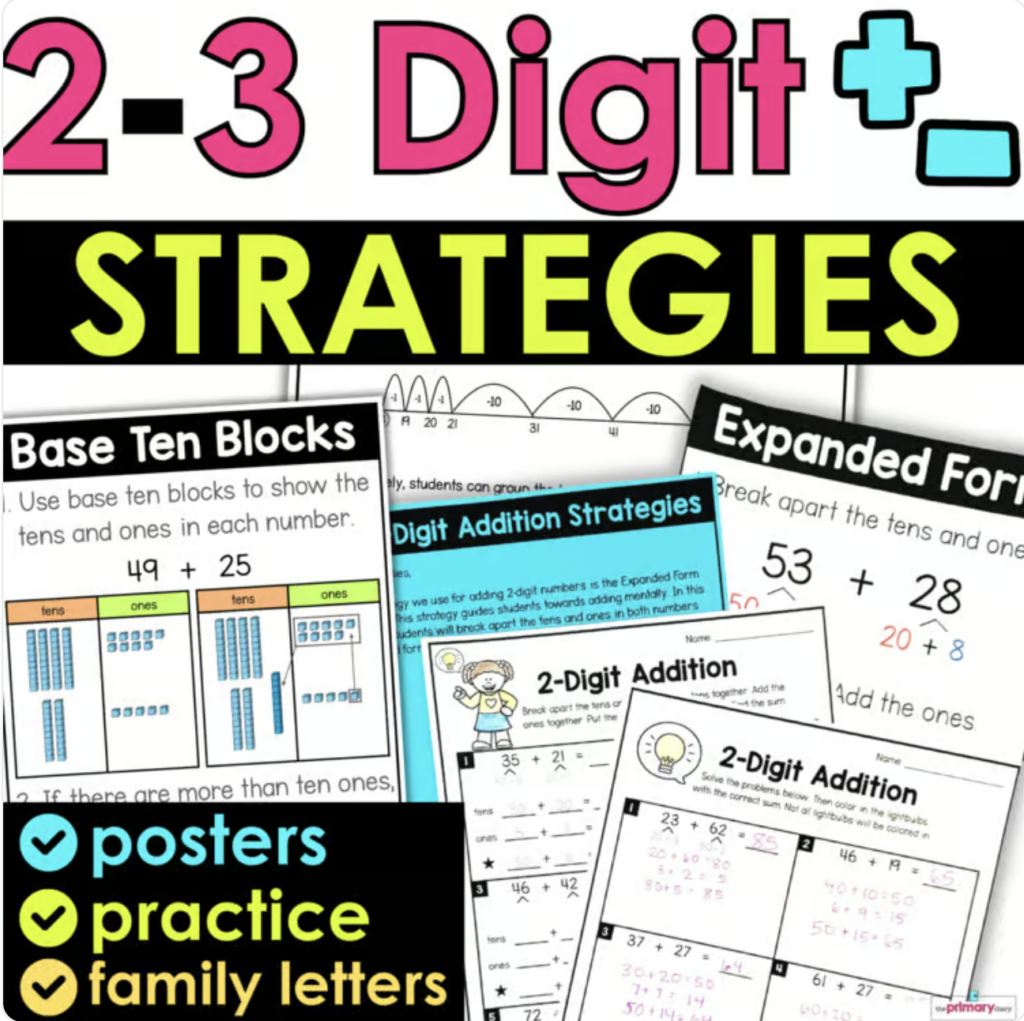
In other words, it helps you actually teach these strategies without reinventing the wheel every unit.
Final Thoughts
If you want students to become confident problem-solvers, start with place value.
When you teach place value strategy addition using expanded form, base ten blocks, and open number lines, you set students up for long-term success.
Want to learn more about addition strategies? You’ll love these:
3 Adding Strategies Every 2nd Grade Teacher Should Teach
Unlocking the Break Apart Strategy in Math (expanded form of addition)