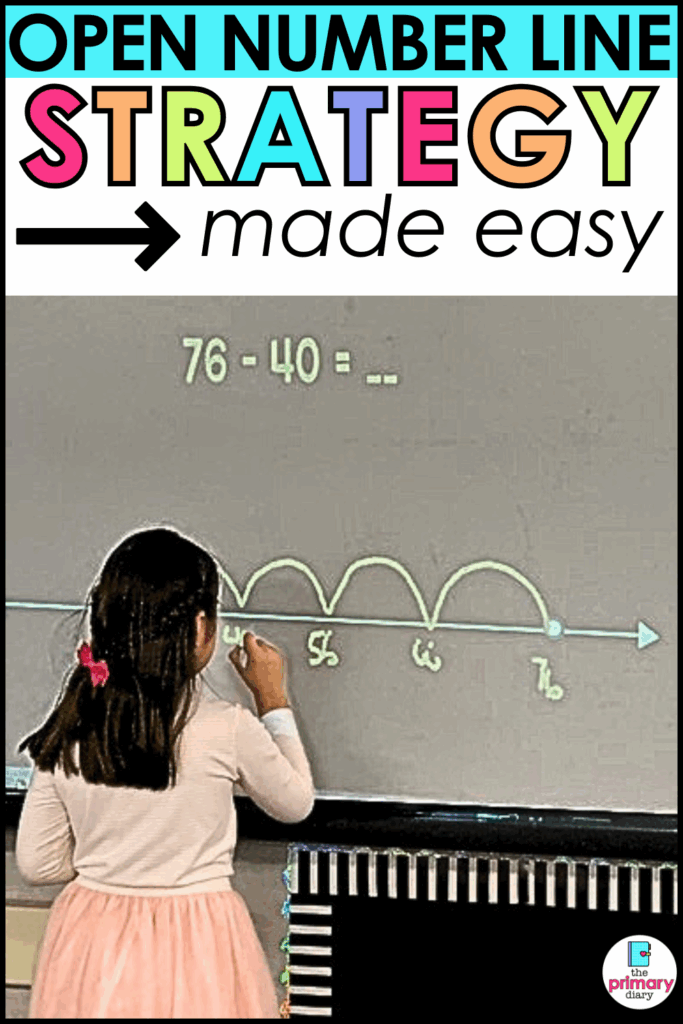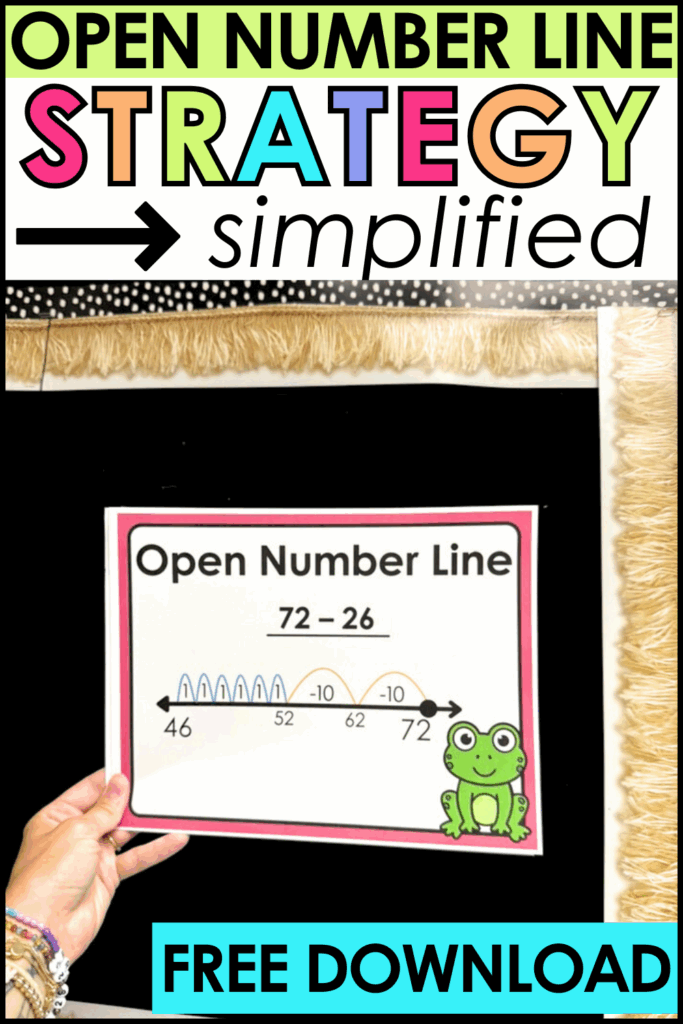
How to Teach Jumping on a Number Line (with Free Posters!)
If you’ve ever tried teaching 2-digit addition and subtraction only to be met with blank stares, you know the struggle is real. That’s where jumping on a number line comes in. It’s a simple, visual way to help students “see” addition and subtraction rather than just memorizing steps. And the best part? Once they learn this number line strategy for addition and subtraction, it sticks — and it smoothly translates from 2-digit numbers right into 3-digit numbers.
Today, I’ll walk you through how to teach it step-by-step, share a few classroom tips I’ve learned along the way, and even give you a set of free math strategy posters you can use tomorrow.
What Is Jumping on a Number Line?
In its simplest form, jumping on a number line is just what it sounds like: students start at one number and “jump” forward to add or backward to subtract.
Instead of trying to hold all the numbers in their heads (hello, mental math mixups), they can visualize the process in small, manageable steps.
For example:
- 23 + 14 → Start at 23, jump forward 10 to 33, then jump 4 more to 37.
- 74 – 9 → Start at 74, jump back 4 to get to 70, then remember to go one more step to 69.
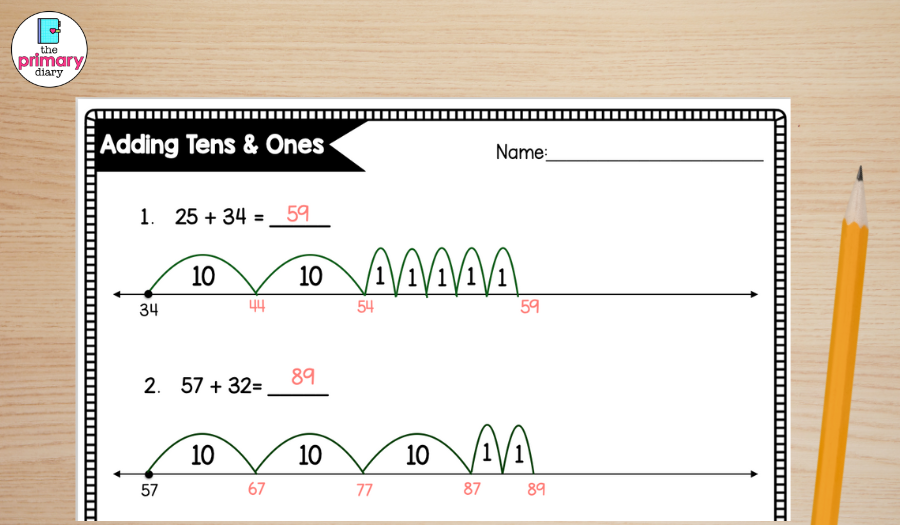
This number line strategy for addition (and subtraction!) makes abstract math tangible, which is exactly what our 1st, 2nd, and 3rd graders need.
Why Use the Number Line Strategy for Addition & Subtraction?
There are plenty of reasons teachers love this strategy, but here are the big ones:
- ✅ It builds number sense. Students aren’t just memorizing algorithms — they’re learning how numbers actually work together.
- ✅ It supports visual learners. The jumps make addition and subtraction visible, which reduces the “I don’t get it” moments.
- ✅ It makes regrouping less scary. Moving across a ten can be intimidating, but the number line breaks it down step by step.
- ✅ It scales easily. Once kids are comfortable with 2-digit problems, you can extend the same process to 3-digit numbers.
- ✅ It’s flexible. Perfect for math talks, small groups, or as a warm-up strategy.
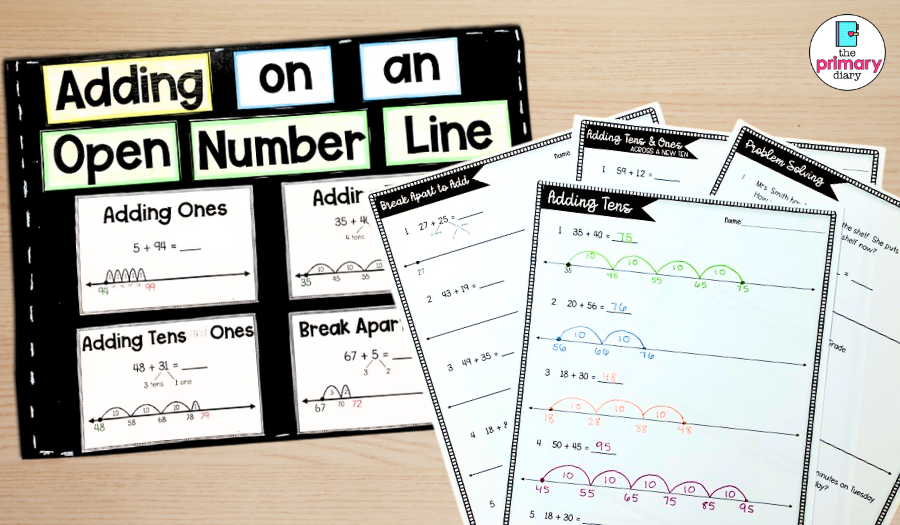
How to Teach Open Number Lines (Step-by-Step)
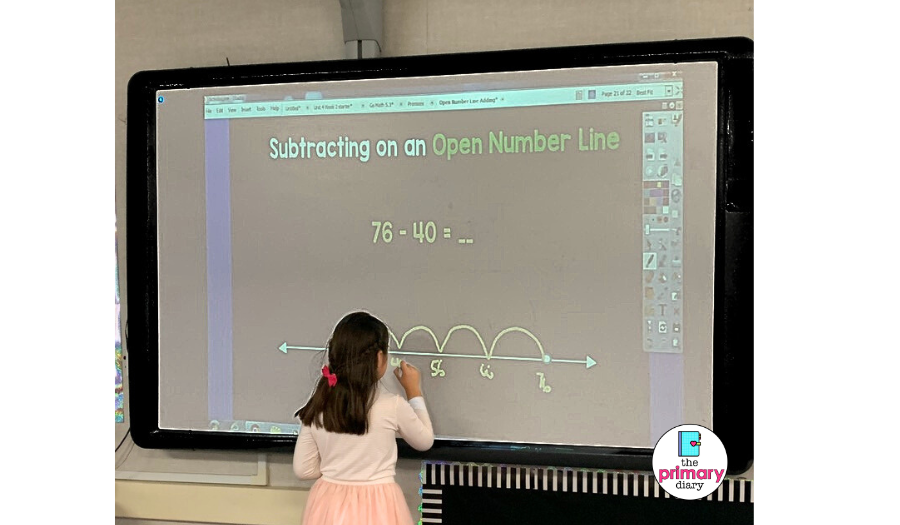
Here’s how I recommend introducing it to your class:
- Start with the basics. Before numbers, explain how the open number line works: forward = going up, backward = going down. Let kids physically walk a taped number line on the floor if you can.
- Begin with ones. Model addition and subtraction by jumping forward or back by one. Let students get used to the movement.
- Introduce jumps of tens. For example, 23 + 10 → start at 23, jump forward 10 to land on 33.
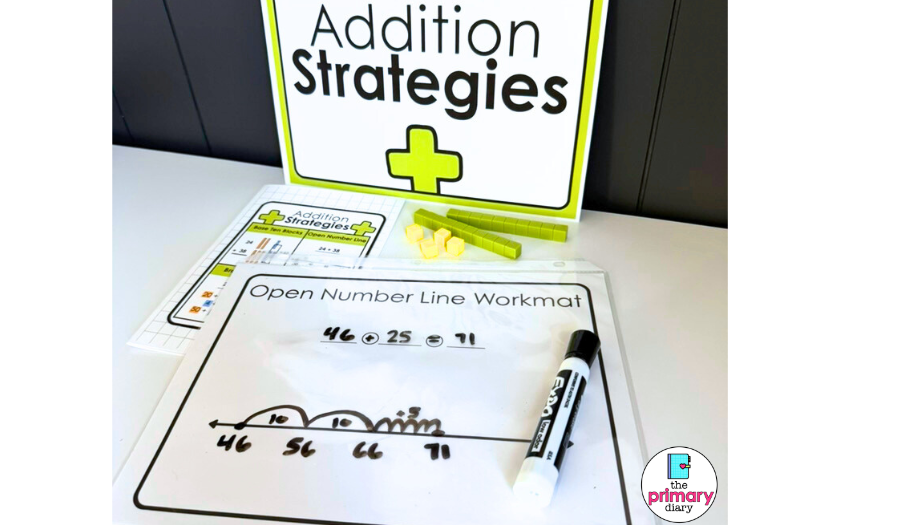
- Combine tens and ones. With a problem like 23 + 14, jump forward 10 first, then add the 4 ones.
- Focus on tricky subtraction. One of the biggest hurdles is subtraction across a ten. For 74 – 9, show students how to jump back to 70, then remember the next step back is 69. Practice this skill explicitly—it pays off later.
- Extend to 3-digit numbers. The beauty of this strategy is that it transfers seamlessly. Once students are confident with 2-digit problems, try something like 236 + 42. They’ll see the process doesn’t change—it just stretches further along the line.
Number Line Strategy for Addition & Subtraction
Tips for Success
Here are a few ways to make the strategy stick:
- Start in small chunks. Just add ones, then just tens, then both.
- Encourage students to talk through their jumps out loud to strengthen math thinking.
- Pair with manipulatives like counters or base ten blocks for students to make connections to other strategies.
- Differentiate: some students may only be ready for small numbers, while others are ready to stretch into 3-digit addition and subtraction.
And if you’re ready to take it a step further, my Open Number Line 2–3 Digit Addition & Subtraction Resource is designed to give your students tons of scaffolded practice. It builds confidence and helps them master this strategy gradually.
Number Line Strategy Anchor Chart
Ready to try this out in your classroom? I’ve got you covered.
I put together a set of free Math Strategy posters that give visuals for each addition and subtraction strategy. You can project them, hang them in your math corner, or I’ve even included mini-posters you can add to math notebooks.
It’s the perfect way to kick off number line strategies and give your students a visual they can rely on.
Final Thoughts
Teaching addition and subtraction strategies doesn’t have to leave you pulling your hair out. With jumping on a number line, you give students a tool they can actually understand — and one that grows with them as math problems get bigger.
Grab your free posters, and watch your students gain the confidence they need to tackle both 2-digit and 3-digit numbers.
And when you’re ready for no-prep, step-by-step practice, check out my Open Number Line Resource.
P.S. Teaching addition and subtraction strategies? The Break Apart Strategy is a must-teach!! You can find my guide to teaching that strategy here.