
Daily Spiral Review: The Math Routine That Changed My Classroom
Let’s talk daily spiral review – the instructional math routine that completely changed my 2nd grade classroom (and what you need to make sure it works!):
A few years ago, I had a frustrating realization.
My students were completing their daily math warm-ups.
They were doing the work. They were filling out the worksheets.
And yet… many of them were still forgetting skills. At first, I blamed the warm-up itself.
Then I realized the real problem.
The worksheet wasn’t the issue.
The missing piece was the review.
Because if students complete a page and never find out whether they were right or wrong, did the practice really help?
That question completely changed the way I thought about daily spiral review.
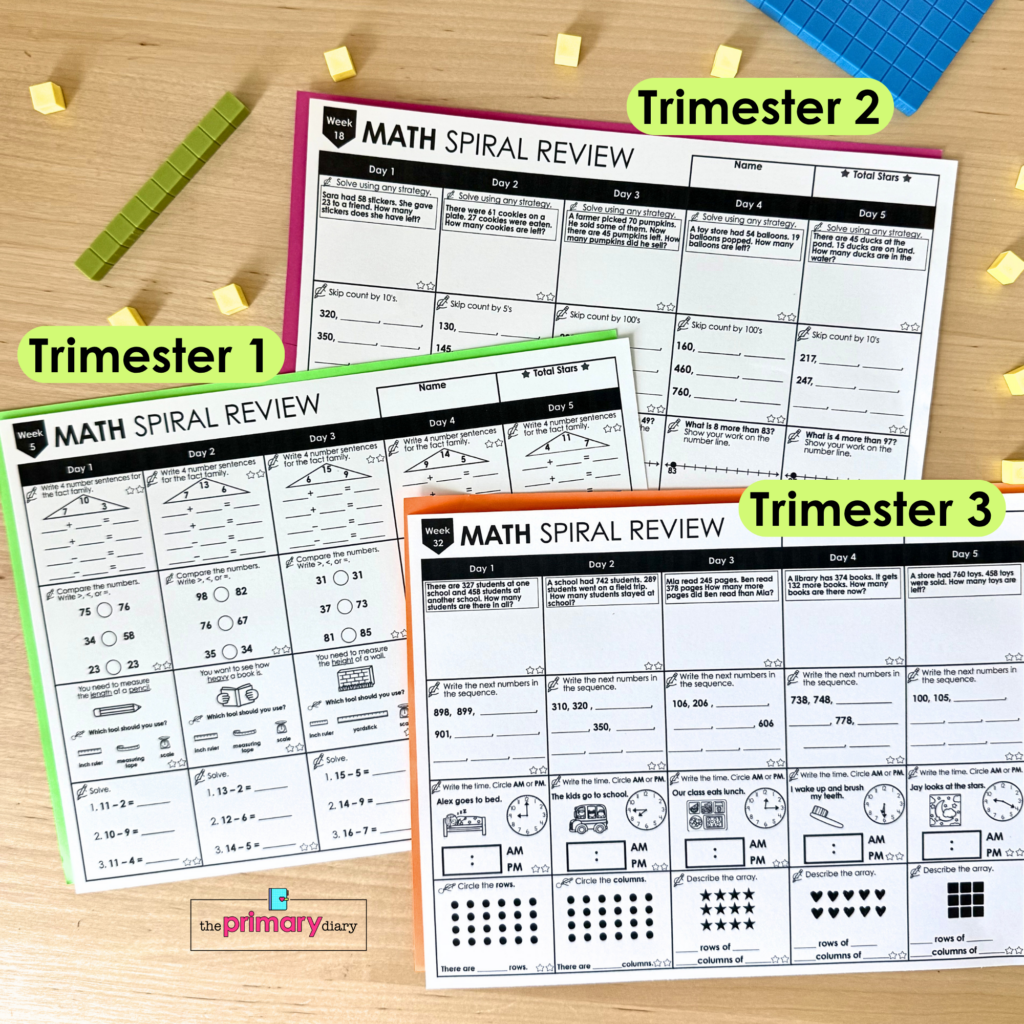
Daily Spiral Review
When most teachers hear the phrase daily spiral review, they think of a worksheet.
A few review problems or a quick warm-up. Or just something students complete while the teacher takes attendance.
And while practice is important, that is only half of the equation.
The real power of daily spiral review comes from the feedback loop.
Students need opportunities to:
- Practice previously taught skills
- Check their answers
- Identify mistakes
- Correct misconceptions
- Reflect on their progress
Without feedback, spiral review can easily become another worksheet students complete and forget.
With feedback, it becomes one of the most powerful tools for long-term retention.
Why My Old Math Warm-Up Wasn’t Working
For years, I used traditional warm-ups.
Students completed them.
Sometimes we reviewed answers, sometimes we didn’t.
And if I’m being honest, whether we reviewed them often depended on how chaotic the morning had been.
Or how much energy I had left… Or whether a student needed immediate support.
Sound familiar?
One day, I found myself rushing back from lunch recess after pumping as a new mom. I walked into a room full of students waiting for me to review their warm-up.
Meanwhile, I was dealing with recess incidents, behavior concerns, and about ten other things competing for my attention.
So I skipped the review.
Then I skipped it again another day. And again.
That was when I realized something important:
If reviewing answers depends on the teacher having extra energy, it probably won’t happen consistently.
And if the review doesn’t happen, the learning opportunity disappears.
Math Instructional Routines Matter More Than Worksheets
One of the biggest shifts I made was focusing less on individual activities and more on creating strong math instructional routines.
Students thrive when they know exactly what to expect.
Every day, my students followed the same process:
- Complete the review problems.
- Check answers together.
- Self-correct mistakes.
- Reflect on effort and accuracy.
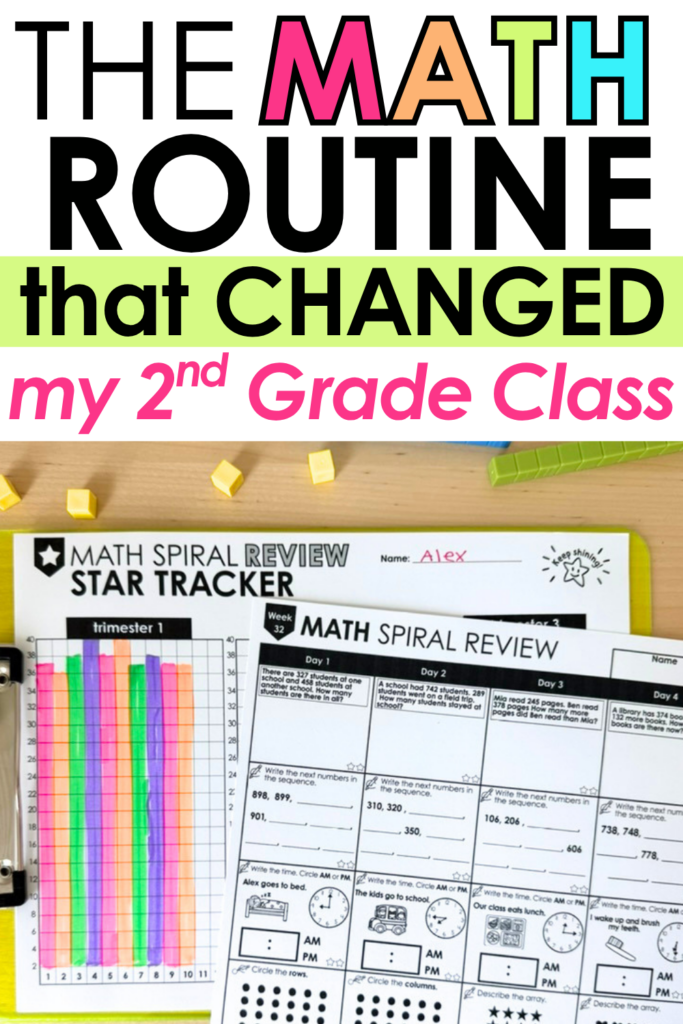
- Track progress.
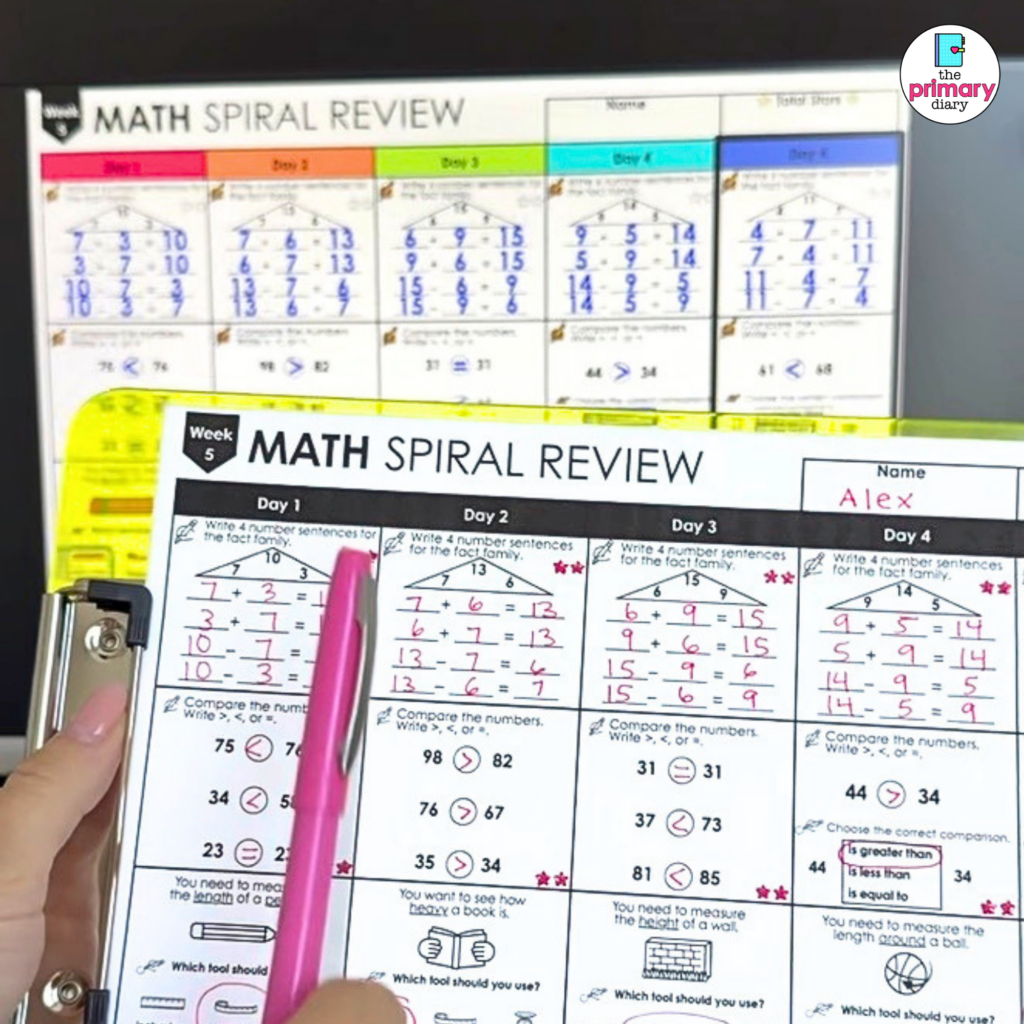
The consistency made a huge difference.
Instead of wondering what to do next, students could focus entirely on the math.
Even better, they started taking ownership of their learning.
The Missing Piece: Immediate Feedback
If I could only give one piece of advice about implementing daily spiral review, it would be this:
Review answers immediately.
When students can see the correct answer while the problem is still fresh in their minds, they learn so much more from the experience.
They begin asking questions like:
- Where did I make a mistake?
- What strategy should I have used?
- Why does this answer make sense?
That kind of thinking is where real growth happens.
In my classroom, I found that immediate feedback transformed warm-ups from a compliance task into a learning opportunity.
Student Tracking Creates Ownership
Another change that surprised me was the impact of tracking progress.
When students can see their growth, they become more invested.
Instead of completing work just because the teacher assigned it, they begin paying attention to their own performance.
They notice patterns and celebrate improvement.
Even something simple like tracking accuracy over time can help students take ownership of their learning.
And honestly, that ownership is something many traditional math warm-ups are missing.
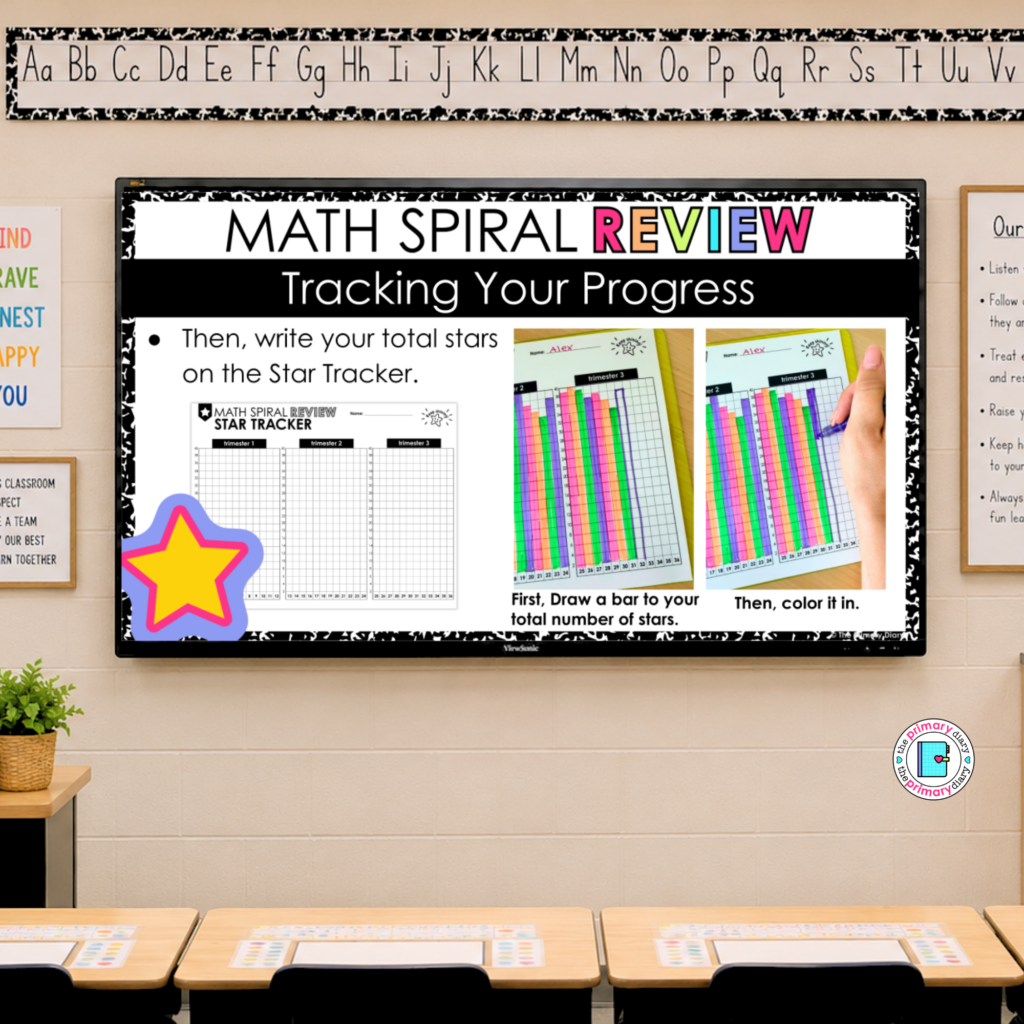
Building a Daily Spiral Review System
Eventually, I stopped thinking about spiral review as a worksheet.
I started thinking about it as a system.
A strong daily spiral review system should include:
- Consistent daily practice
- Mixed review of previously taught skills
- Immediate feedback
- Student self-reflection
- Progress tracking
- Predictable routines
When all of those pieces work together, students retain more because they are actively engaging with their mistakes instead of simply moving on.
That philosophy eventually became the foundation of my Anti-Busywork Daily Spiral Review Math System.
I wanted something that did more than give students practice. I wanted a system that ensured the review actually happened.
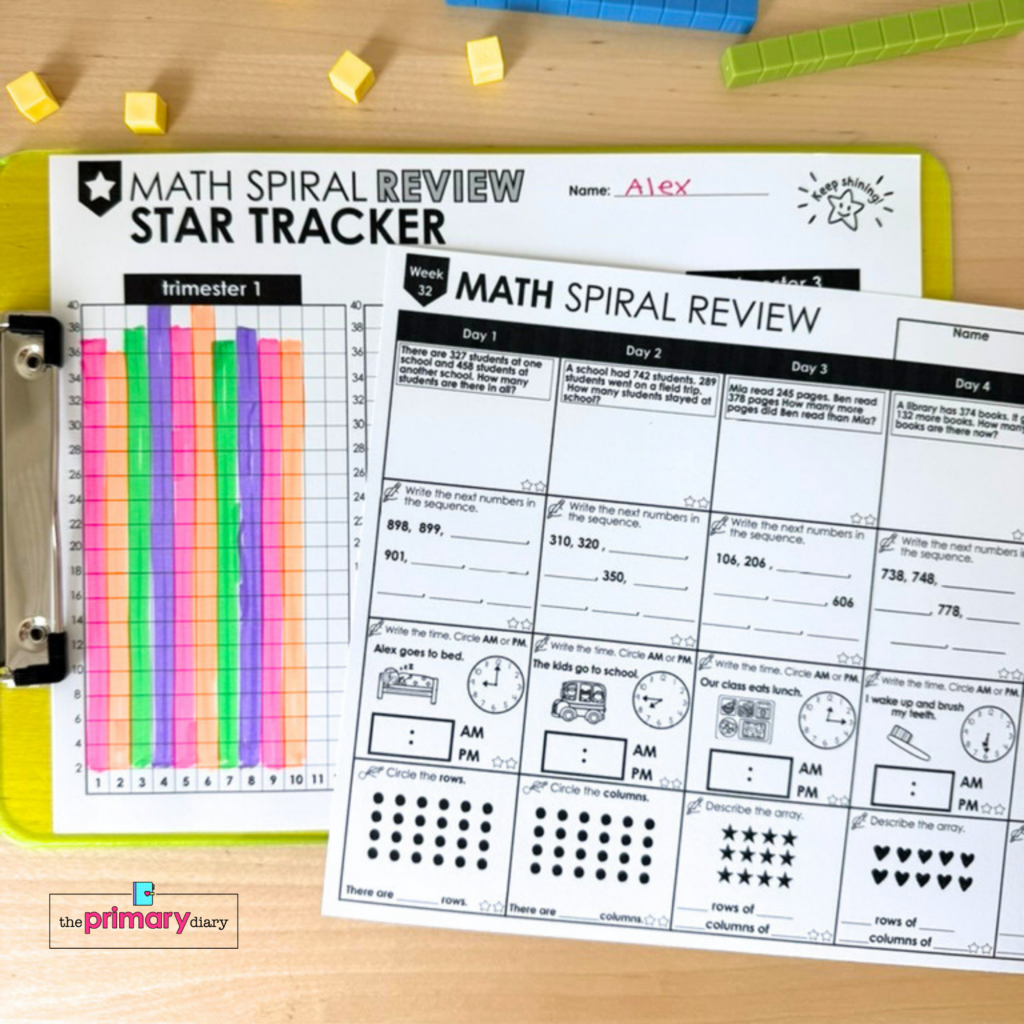
That is why every warm-up includes matching teaching slides with modeled answers, opportunities for self-checking, and student progress tracking. The goal is not simply to complete the work. The goal is to learn from it.
You can find the 2nd Grade Anti-busywork Spiral Review here.
Final Thoughts
The biggest lesson I learned was this:
Students do not retain skills because they completed a worksheet.
They retain skills because they practiced, received feedback, corrected mistakes, and revisited concepts over time.
That is why strong math instructional routines matter so much.
A worksheet can be helpful.
A routine can change learning.
If your current warm-up feels like busywork, don’t start by asking for a better worksheet.
Start by asking whether students are getting the feedback they need.
Because when practice and feedback work together, that is when learning starts to stick.
Want to learn more? Read “What is a Spiral Review: Why Your Students Keep Forgetting Math Skills”