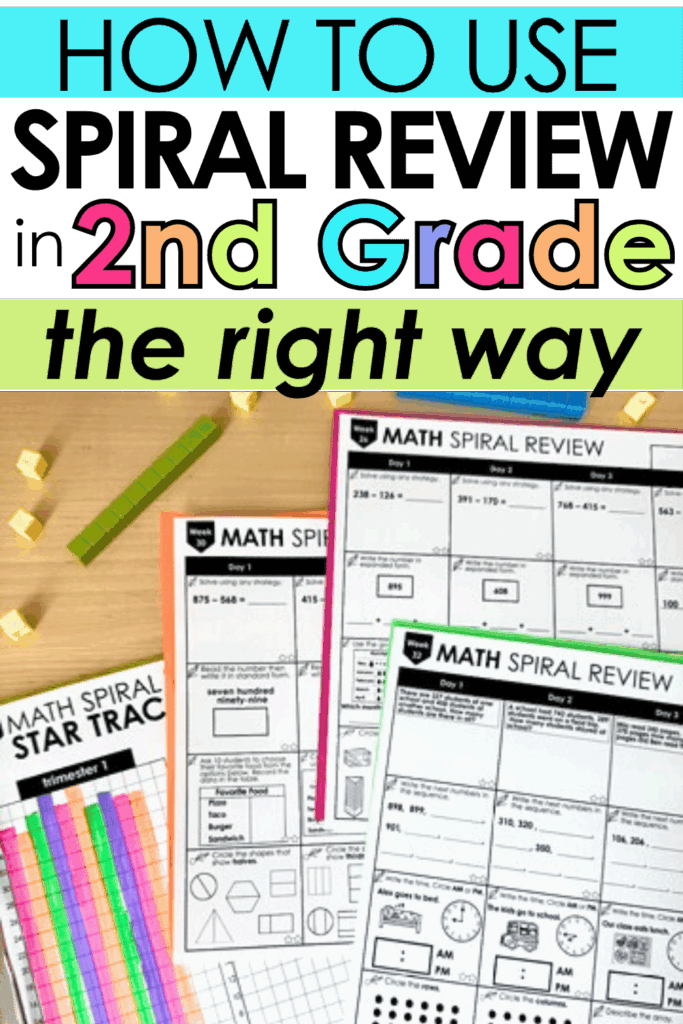
What Is Spiral Review? (And Why Your Students Keep Forgetting Math Skills)
Let’s talk… What Is Spiral Review?:
You taught the lesson.
Your students practiced.
They passed the chapter test.
Then three weeks later, you put a similar problem in front of them and suddenly it felt like they had never seen it before.
Sound familiar?
If so, you’re not alone. This is one of the biggest frustrations elementary teachers face. We spend time teaching important math skills, students seem successful, and then somehow those skills disappear.
That is exactly why so many teachers start looking into spiral review.
But what is a spiral review, and does it actually work?
Let’s break it down.
What Is Spiral Review?
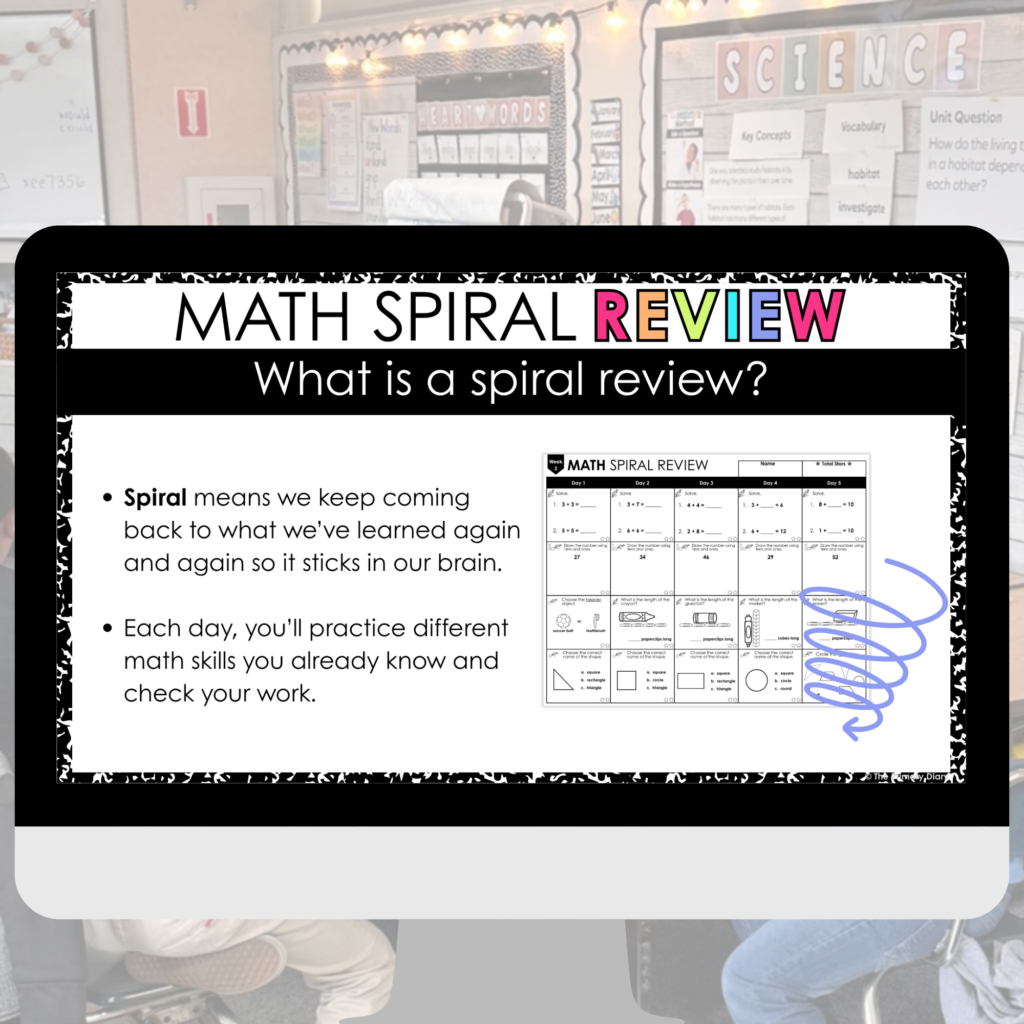
At its simplest, spiral review is the practice of continuously revisiting previously taught skills throughout the school year.
Instead of teaching a skill, testing it, and moving on forever, students continue to see that skill mixed into future practice.
For example, let’s say you teach place value in September.
With a traditional approach, students might complete a unit, take a test, and then not see place value again until benchmark season.
With spiral review, students continue to encounter place value questions throughout the year while also practicing addition, subtraction, measurement, money, time, and other standards.
As a result, students are constantly retrieving information from their memory instead of learning it once and forgetting it.
That retrieval process is where the magic happens.
Why Students Forget Math Skills
Before we talk more about Common Core spiral review, it’s important to understand why students forget in the first place.
The problem usually isn’t that students never learned the skill.
The problem is that they have not revisited it enough.
Think about it this way.
If you learned a phone number today but never used it again, how likely would you be to remember it six months from now?
Probably not very likely.
Math works the same way.
Students need repeated opportunities to retrieve information. Every time they bring a skill back to mind, the learning becomes stronger.
That is why students can often pass a chapter test but struggle on cumulative assessments later in the year.
They learned the skill long enough for the test. They just did not revisit it enough for long-term retention.
Common Core Spiral Review and Long-Term Retention
One of the biggest goals of the Common Core standards is depth of understanding.
Students are expected to apply skills in new situations, solve problems, and explain their thinking.
However, that becomes difficult when students are constantly relearning forgotten skills.
This is where Common Core spiral review can be incredibly helpful.
Instead of isolating standards into separate units, spiral review helps students maintain previous learning while building new understanding.
For example, a student might solve:
- an addition problem
- a place value question
- a word problem
- a measurement task
all within the same review session.
As a result, students learn that math is connected rather than divided into separate chapters.
What Makes Spiral Review Effective?
Not all spiral review is created equal.
Many teachers have experienced a situation where students complete a daily warm-up, turn it in, and never look at it again.
Technically, they practiced.
But did they actually learn from it?
Maybe not.
The most effective spiral review includes two parts:
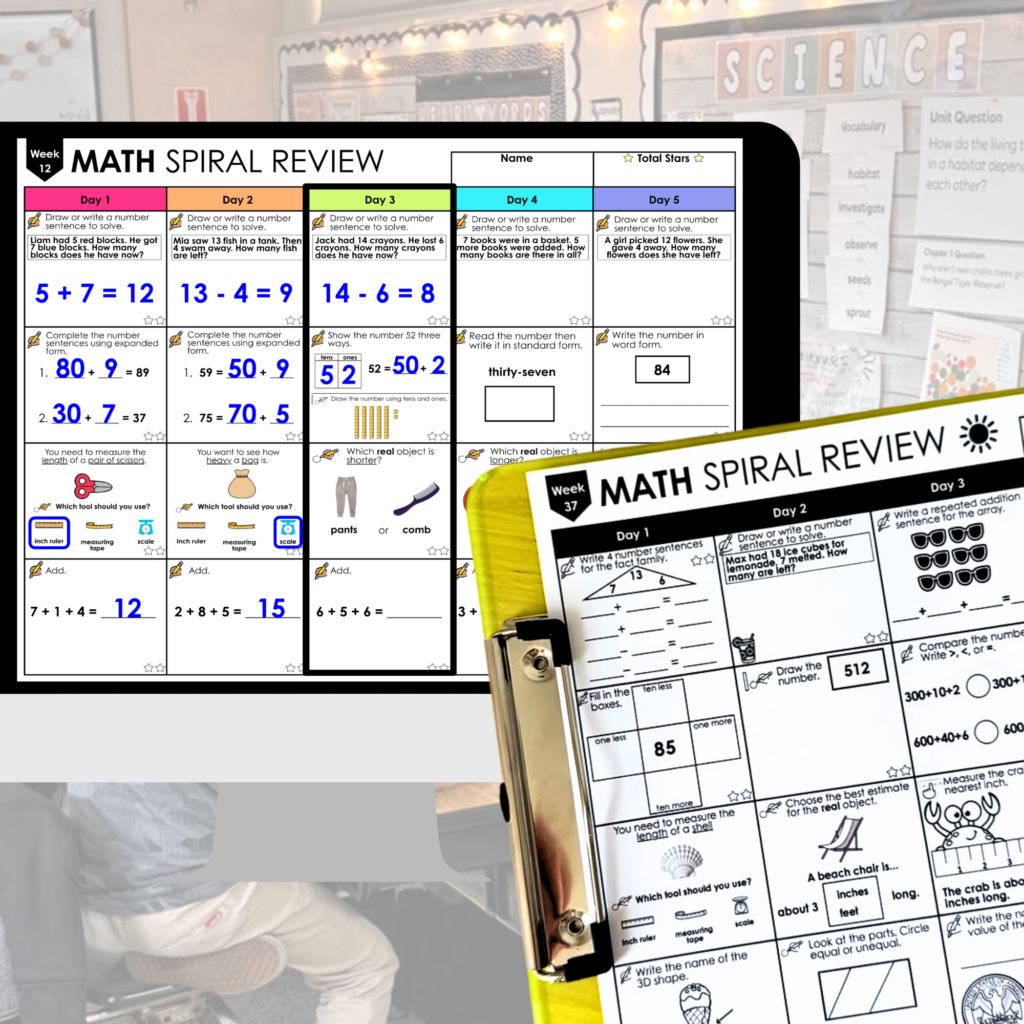
1. Meaningful Practice
Students need regular exposure to previously taught skills.
The questions should be short enough to be manageable but purposeful enough to reveal what students know.
2. Feedback
This is the part that often gets skipped.
Students need to know whether their answers were correct.
Even more importantly, they need opportunities to discuss mistakes and understand why an answer was correct.
Without feedback, spiral review can quickly become just another worksheet.
With feedback, it becomes a powerful learning tool.
What Spiral Review Looks Like in a 2nd Grade Classroom
In my classroom, I found that consistency mattered just as much as the questions themselves.
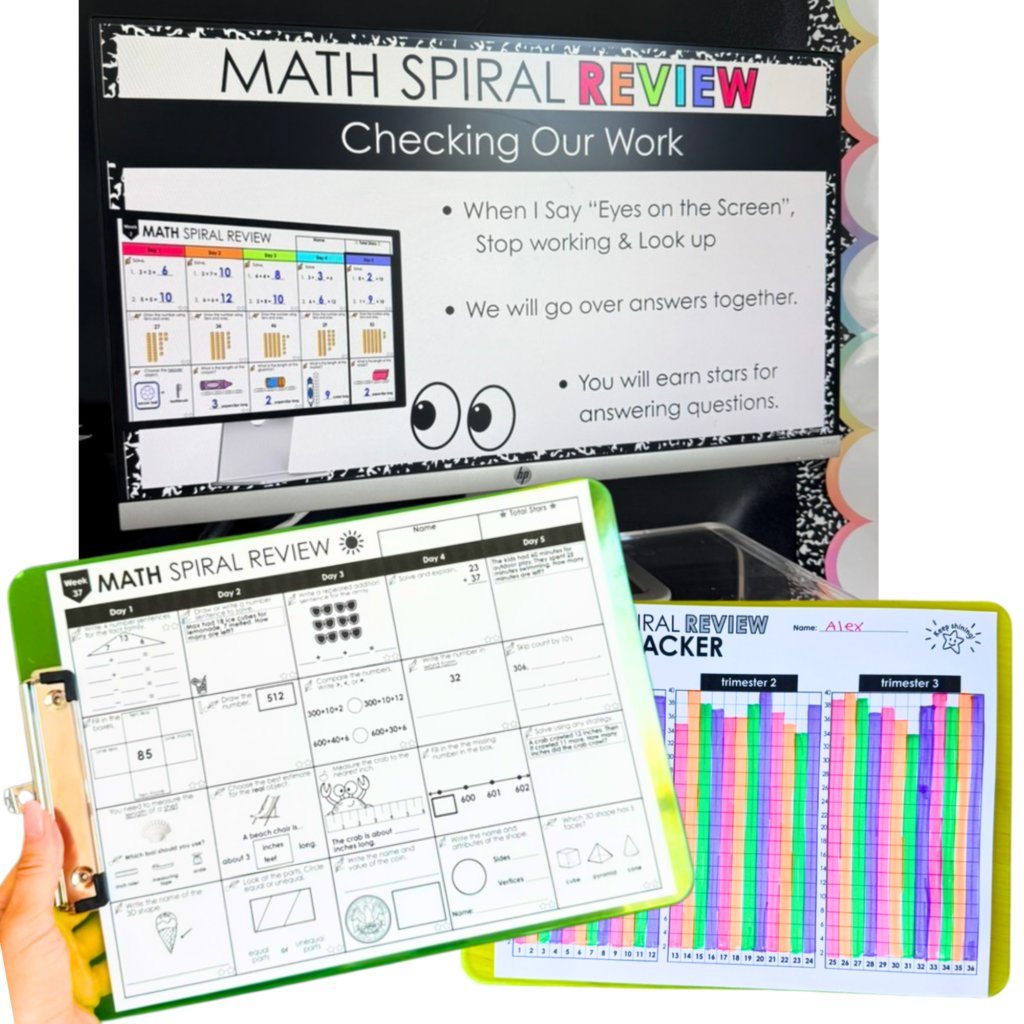
Students completed a short review each day. Then we immediately reviewed answers together.
Students checked their work, corrected mistakes, and reflected on their progress. Over time, something interesting happened.
Students stopped viewing mistakes as failures.
Instead, mistakes became information.
They learned to ask:
- What did I miss?
- Why did that answer make sense?
- What can I do differently next time?
That shift helped build ownership and confidence.
It also gave me a clearer picture of which skills needed more support.
So, what is spiral review?
It is a simple but powerful way to help students retain skills over time.
More importantly, it recognizes an important truth about learning:
Students do not master a skill because they saw it once.
They master a skill because they revisit it, practice it, and receive feedback over time.
If your students seem to forget skills from one unit to the next, the answer may not be more worksheets.
Instead, it might be a better review system.
That realization is actually what led me to create my Anti-Busywork Daily Spiral Review Math System. I wanted a routine that combined meaningful practice with immediate feedback so review time became a learning opportunity instead of another item on the checklist.
You can read more about the math routine that changed my 2nd grade classroom here.
Whether you create your own spiral review routine or use a ready-made system, the key is the same: practice plus feedback.
Because when students have both, learning sticks.
Speaking of making math stick – you’ll love this post:
How to Teach Addition in 2nd Grade so it actually sticks!