
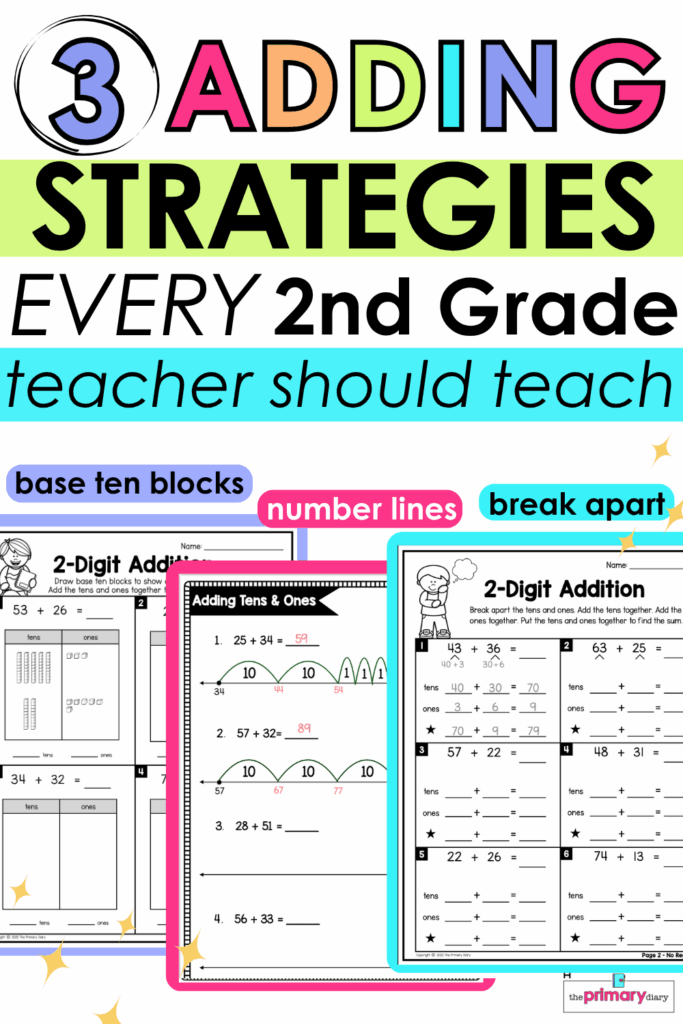
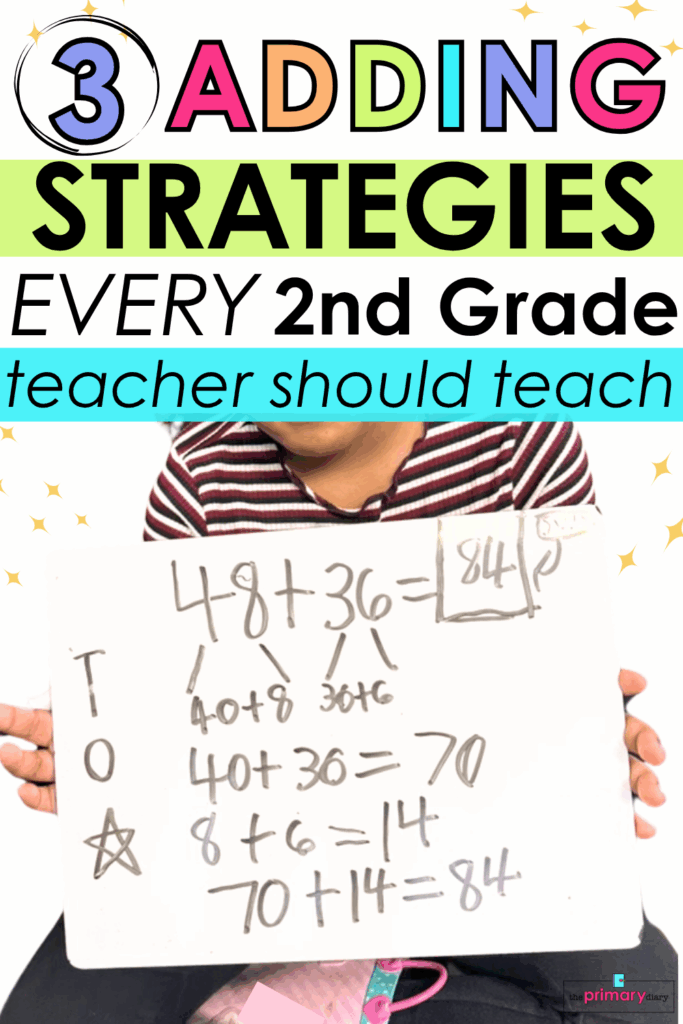
3 Adding Strategies Every 2nd Grade Teacher Should Teach
You’ve modeled, you’ve practiced, you’ve even broken out the base ten blocks — but somehow, 23 + 48 still sends your kids into full “guess-and-check” mode. That’s where teaching adding strategies (the right way) changes everything.
When students learn multiple addition strategies — like base ten blocks, open number lines, and break-apart they’re not just memorizing steps. They’re building number sense, flexibility, and confidence that transfers to every math problem they’ll ever see.
So today, let’s talk through the best adding strategies for 2nd grade, how to teach them effectively, and where to grab free resources to make your prep a whole lot easier.
What Are Adding Strategies (and Why Do They Matter)?
Adding strategies are visual and mental methods that help students understand how numbers work together — instead of just performing a procedure.
These strategies help 2nd graders:
- See numbers in flexible ways (not just stacked vertically).
- Understand place value and regrouping more deeply.
- Transition smoothly from 2-digit to 3-digit numbers later on.
When you teach adding strategies intentionally, your students start to get it. They stop asking, “Do I carry the one?” and start saying, “I can break apart 48 into 40 and 8 — that’s easier to add.”
And that, teacher friend, is the magic. ✨
Adding Strategy #1: Base Ten Blocks – Make It Concrete
Start with the basics. Before students can add abstractly, they need to see it.
Base ten blocks are the perfect way to model place value and regrouping visually. Students can:
- Count out tens and ones to represent each number.
- Physically combine groups to show addition.
- Exchange 10 ones for a ten to model regrouping.
Once they’ve built it with blocks, transition to drawing models on paper — so they can connect the hands-on experience to written work.
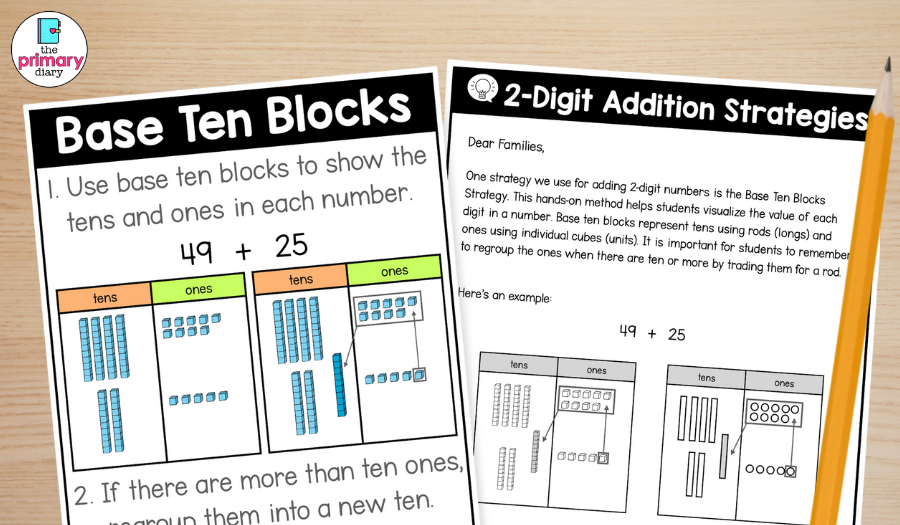
(Psst — my 2- and 3-Digit Addition & Subtraction includes printable base ten practice pages with regrouping and without. Perfect for scaffolding!)
Adding Strategy #2: Jumping on a Number Line – Build Mental Math
Next, move from concrete to visual.
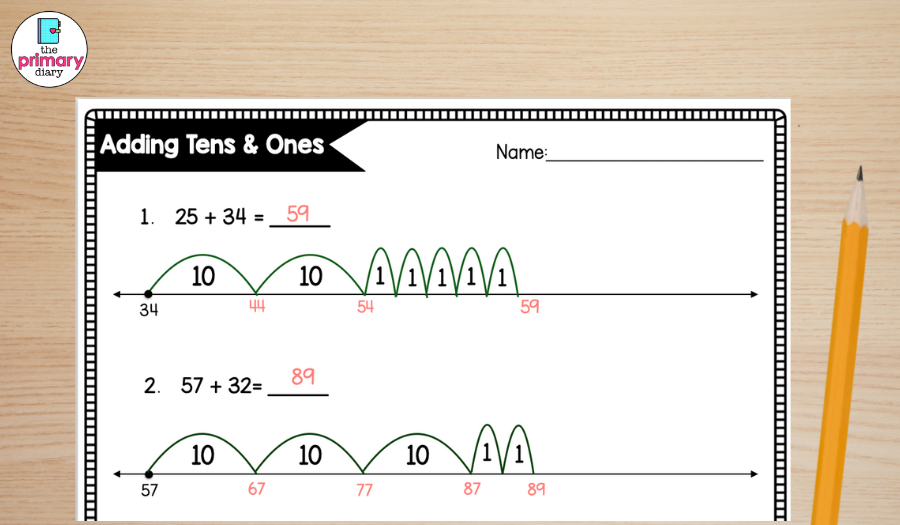
The open number line strategy for addition (or as I like to call it, “jumping on a number line”) helps students see how numbers grow.
Here’s how I introduce it:
- Start by counting forward by tens — 24 + 10, 24 + 20.
- Then move to adding ones — small hops.
- Finally, mix them — 24 + 13 → jump 10, then 3.
This strategy is great for developing mental math and showing that adding tens and ones are connected, not two separate skills.
And yes — it’s just as effective for subtraction once they’re ready to jump backward!
👉 Want a visual to make this easier? Grab my free 2-Digit Strategy Toolkit below— it includes addition and subtraction posters for the number line, break apart, and base ten strategies.
Adding Strategy #3: Break Apart Strategy – Encourage Flexible Thinking
Once students are confident with place value, it’s time for the break apart strategy — my personal favorite for teaching addition fluency.
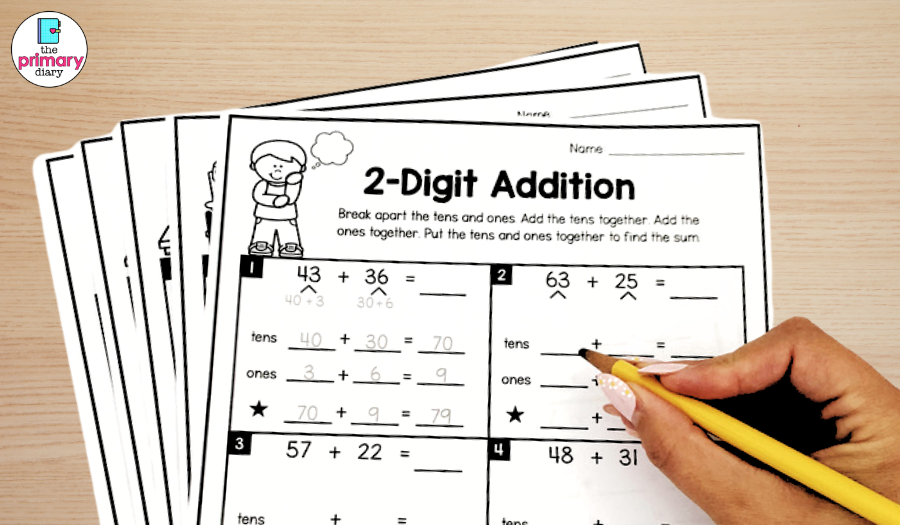
Students learn to decompose numbers into tens and ones to make adding easier:
36 + 25 → (30 + 20) + (6 + 5) = 61
This strategy reinforces place value understanding and helps students see patterns (like that 6 + 5 = 11 means regrouping).
When I teach this, I model it with a place-value chart, then move to recording equations. Eventually, students start doing it mentally — which is the real win!
How to Pull It All Together
Once your students have been introduced to these adding strategies, keep them visible.
Display posters. Review them during warm-ups. Let students choose which strategy works best for them.
The goal isn’t for every student to use the same method — it’s for every student to have a method that makes sense.
If you want a ready-to-go resource that includes scaffolded worksheets for all three strategies (with and without regrouping), you’ll love my 2- and 3-Digit Addition & Subtraction resource. It’s low-prep, visual, and helps your students transition confidently to larger numbers.
Final Thoughts
When you teach adding strategies intentionally, you’re giving your students more than a way to solve a math problem – you’re giving them tools to understand numbers on a deeper level.
And that’s the kind of math confidence that lasts all year long!!
You can grab my FREE 2-Digit Addition and Subtraction Toolkit here (with anchor charts inside!)
One Comment